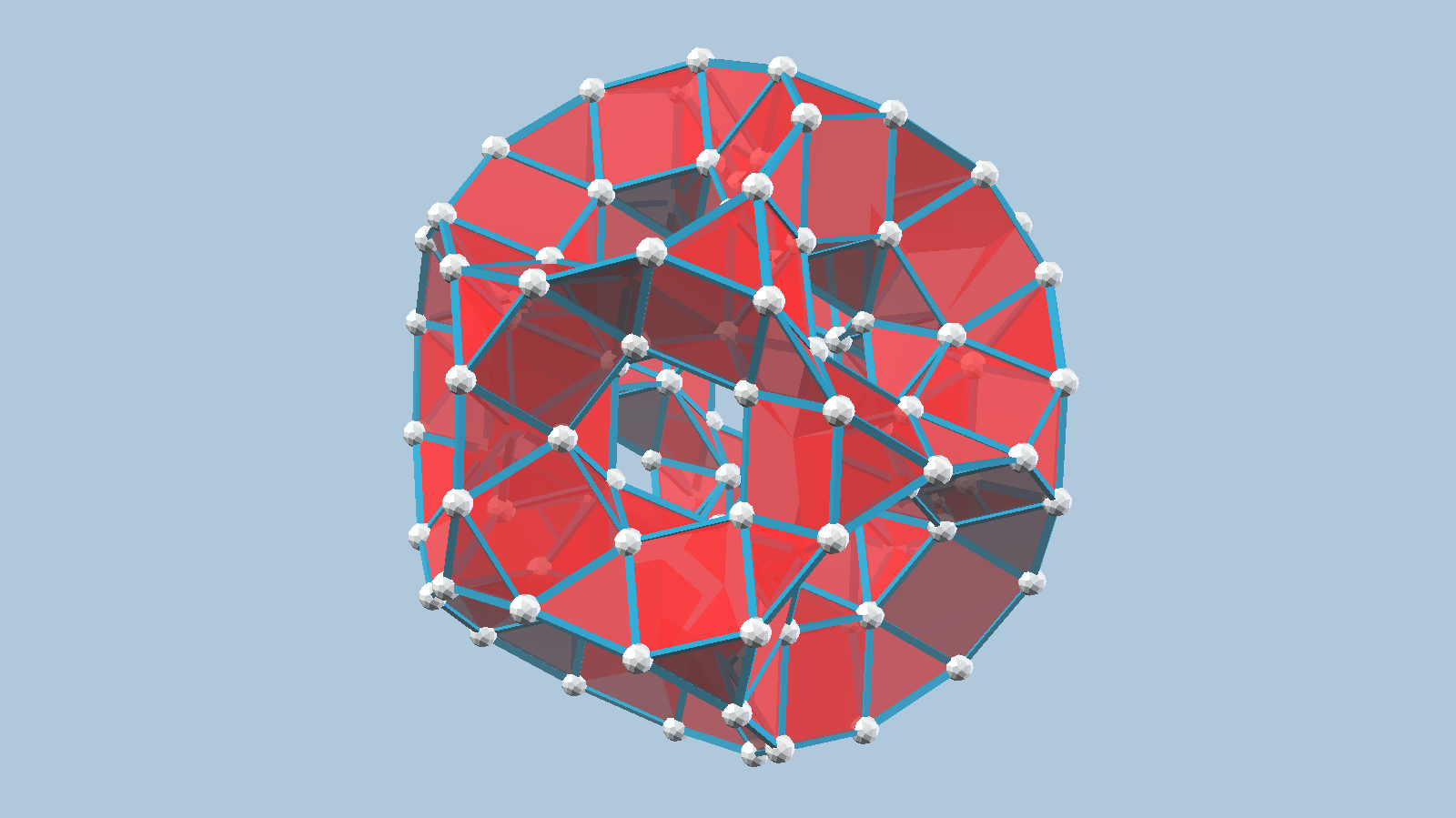
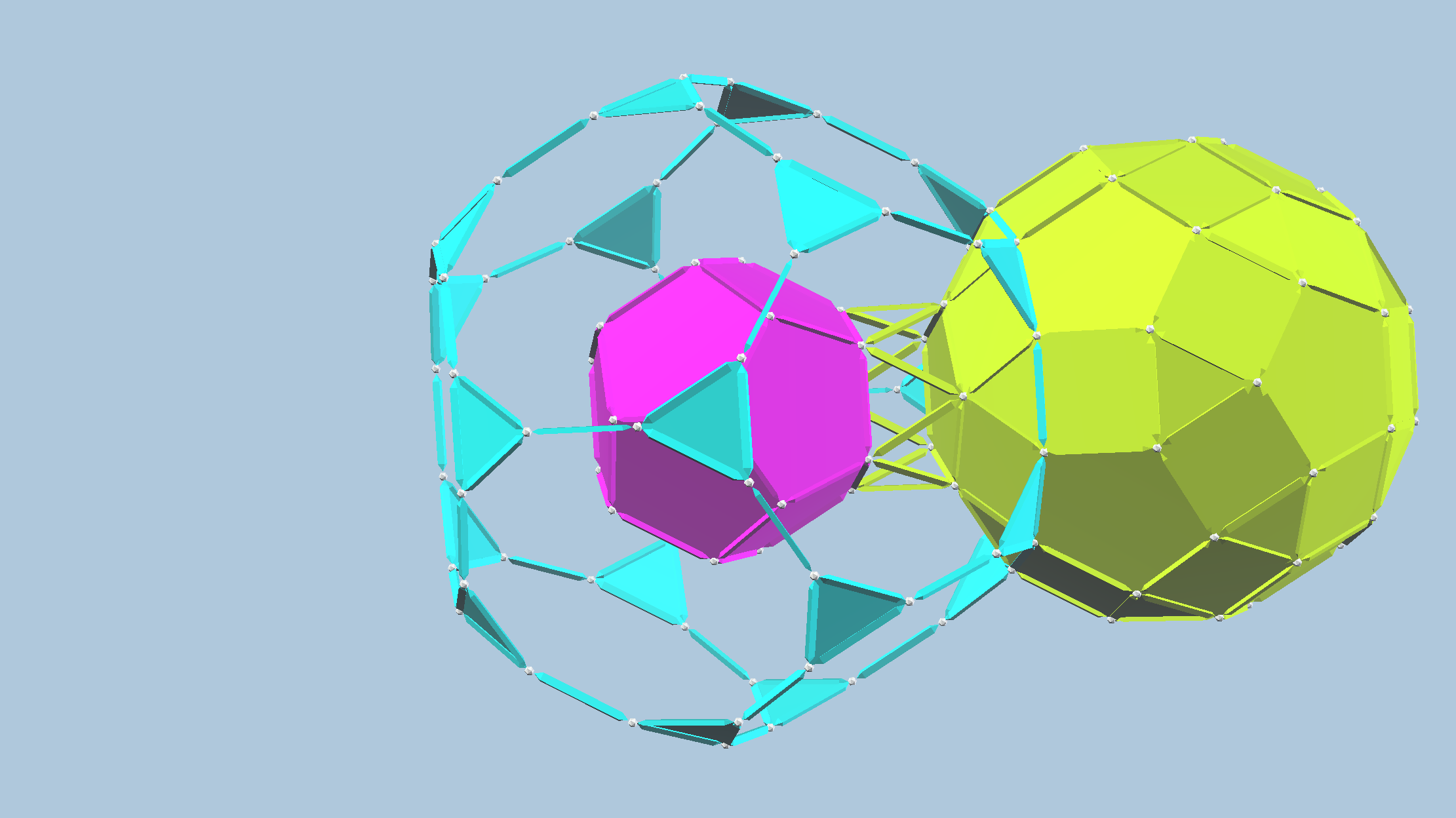
A first vZome model explains the construction. Consider an inner dodecahedron (magenta), concentric with an outer truncated dodecahedron (teal). A rhombicosidodecahedron (green) intersects the truncated dodecahedron along a decagonal face. The solid intersection is a pentagonal cupola, (Johnson solid J5). Its pentagonal face connects to a face of the dodecahedron by a pentagonal antiprism.

This model, originally designed by Karl Horton is a famous model among geomag/supermag builders, because it requires both geomag and supermag rods:

  1. Square panels are required for stability. These can only be held in place if they are clamped between at least two geomag rods.
  2. Some edges meet at a sharp angle with a vertex, and that can only be achieved with supermag rods, not with geomag rods.
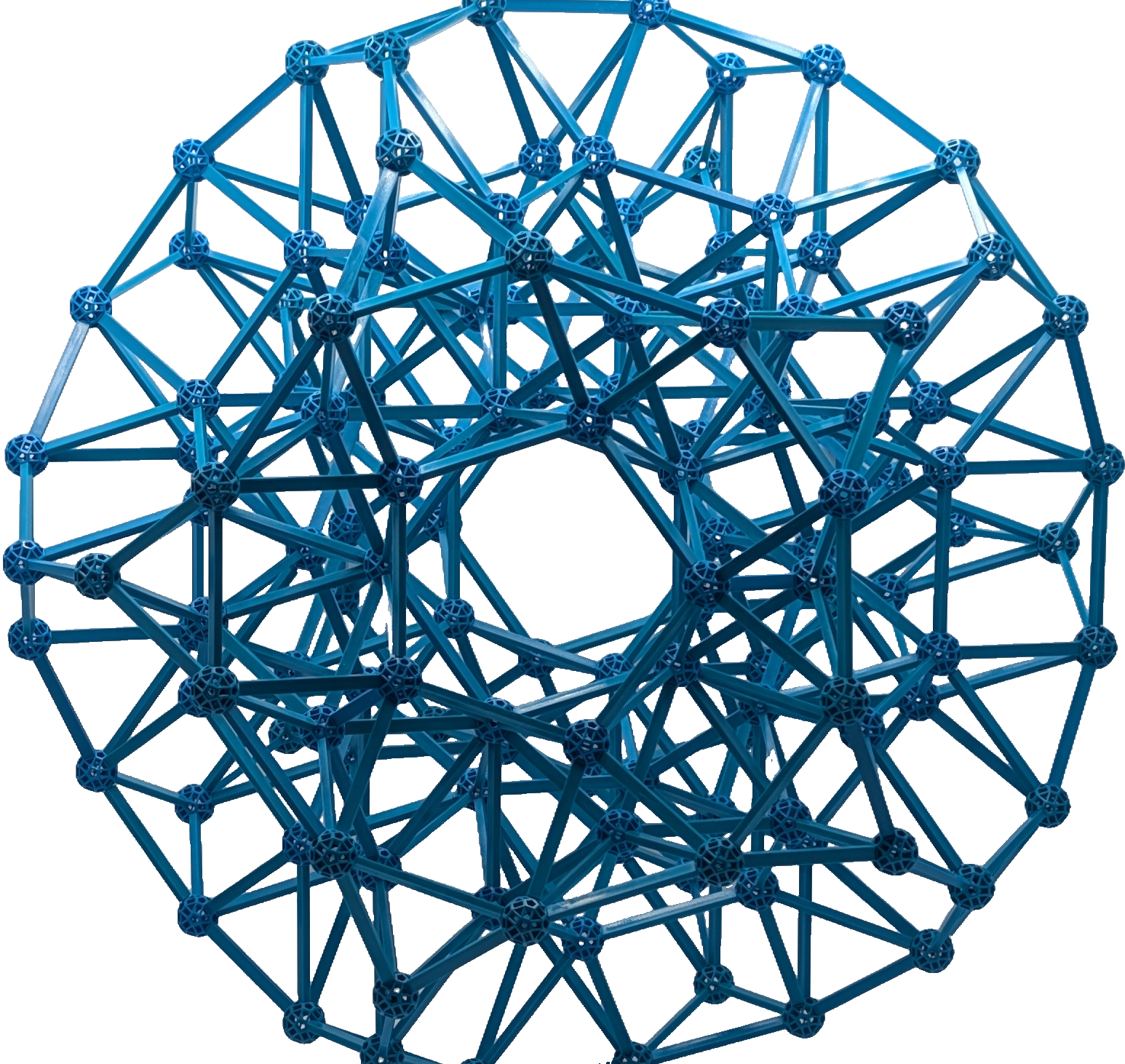
    The Zometool model, here with edge length b1, is easier to build than its Geomag counterpart. However, due to the lack of panels, it is aesthetically inferior:

    Zometool model without panels
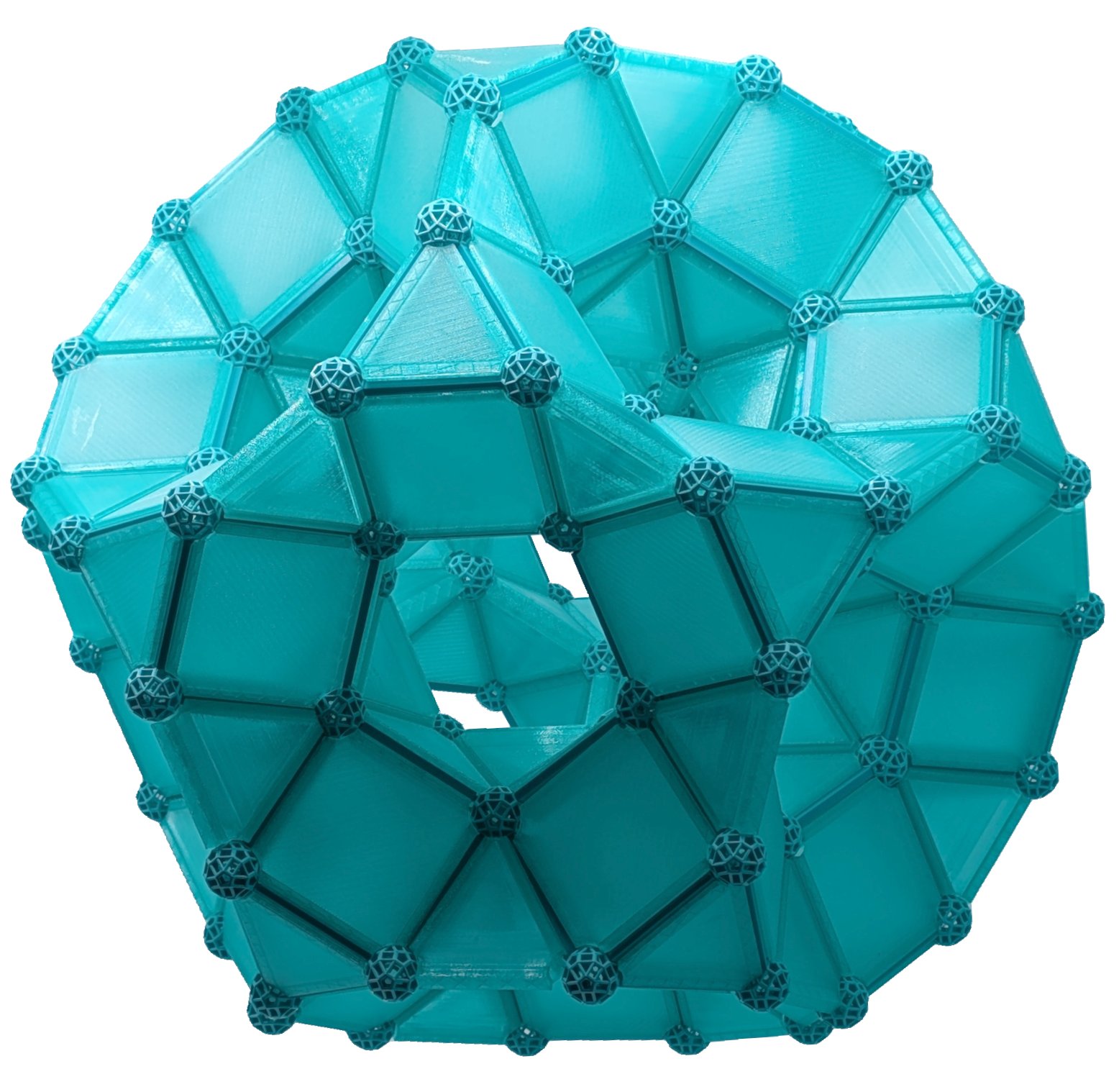
    Therefore, panels have been 3D printed using translucent PETG. Some pairs of panels have large dihedral angles (138.19°). These are printed as one block, integrating their common edge. Both the panel blocks and the triangular panels have two versions, one for the inner part of the thoroid, one for the outer part, due to different dihedral angles with the neighbouring panels. In the OpenSCAD file, the inside and outside panels are respectively cyan and teal coloured. The second vZome model presents the Zometool building instructions, now with edge length hb2 and including these panels.
    Zometool model with panels
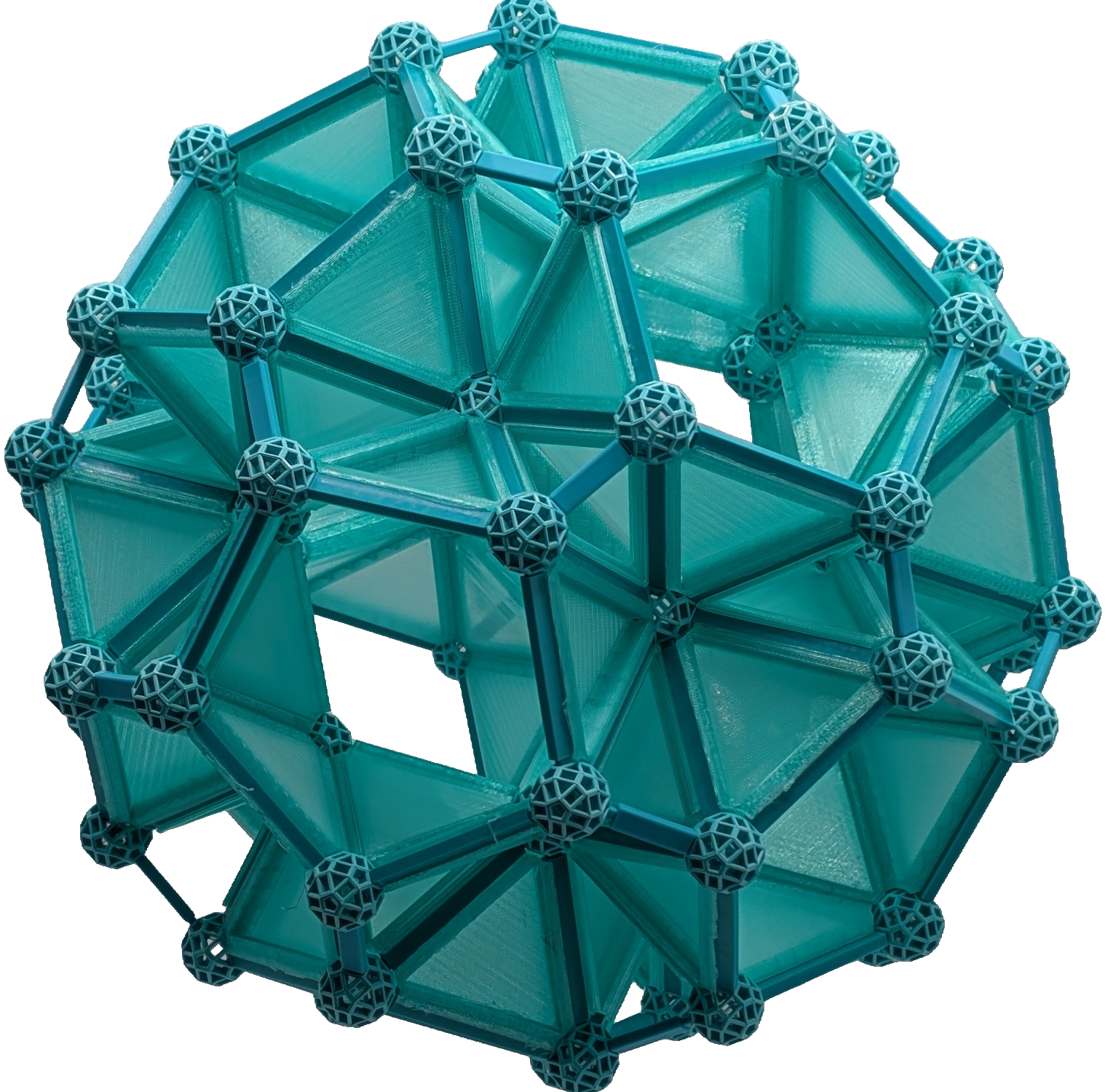
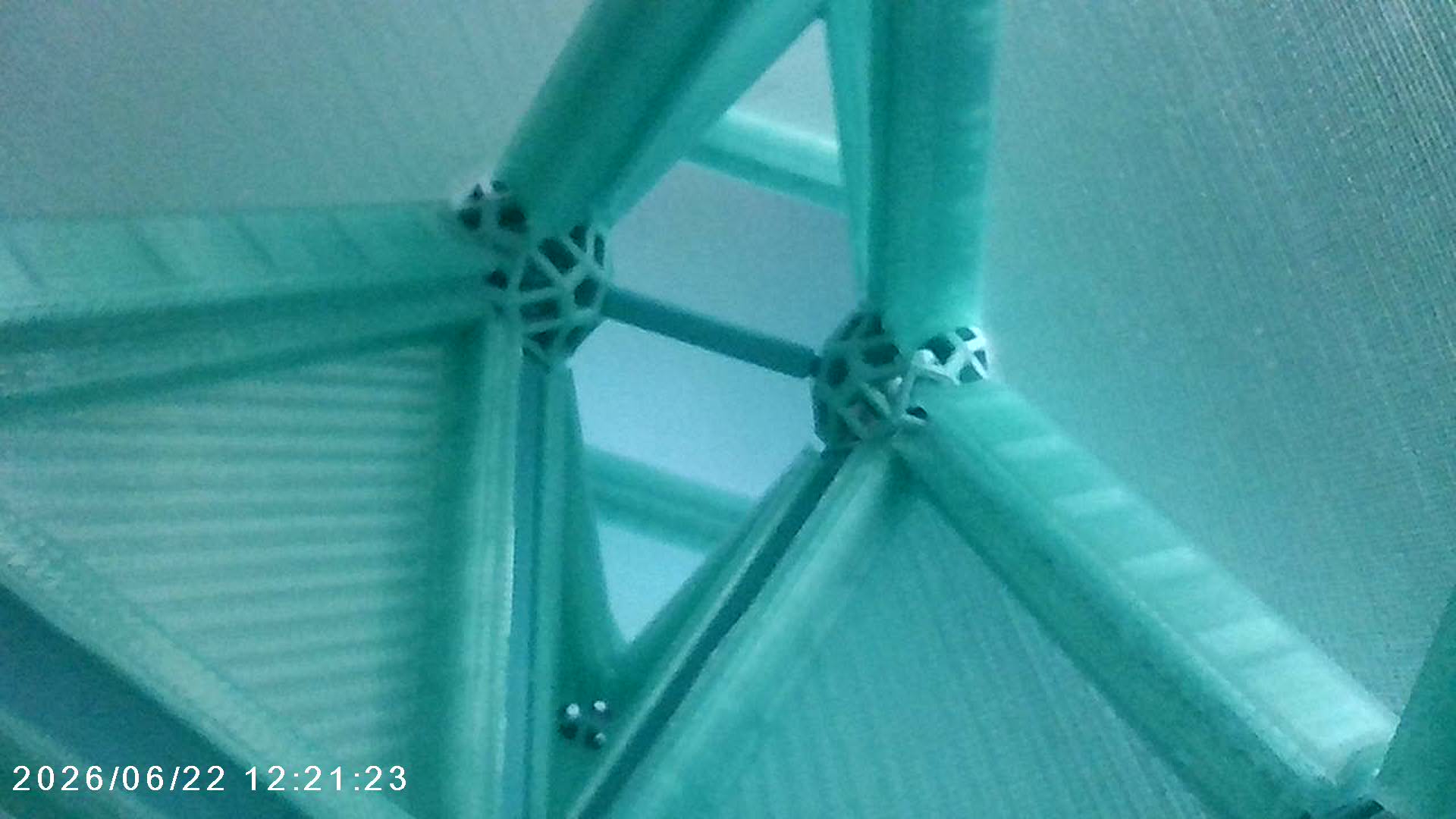
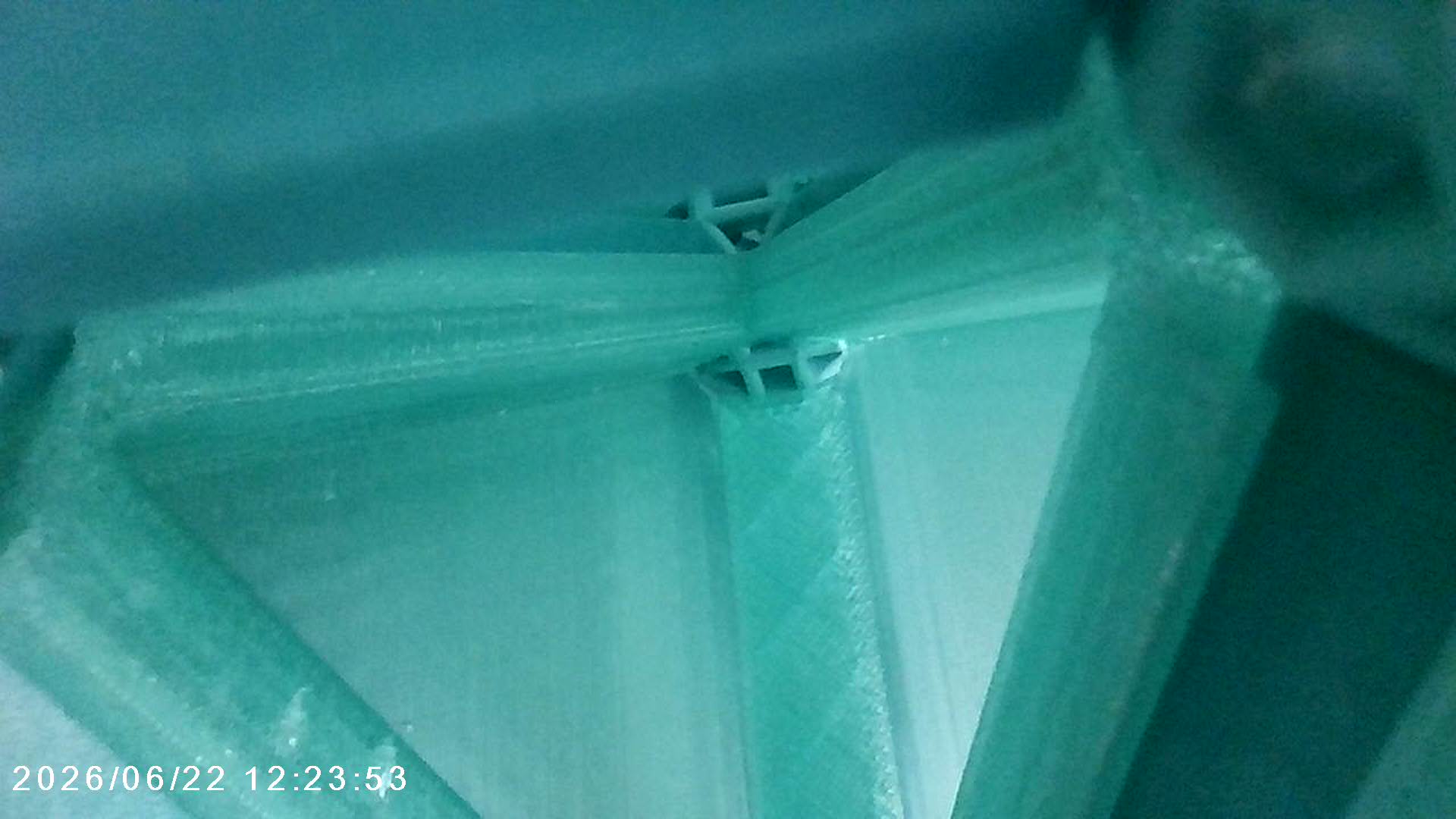
    Next some pictures halfway the construction of the physical model:
    Inner part of the model, view from outside
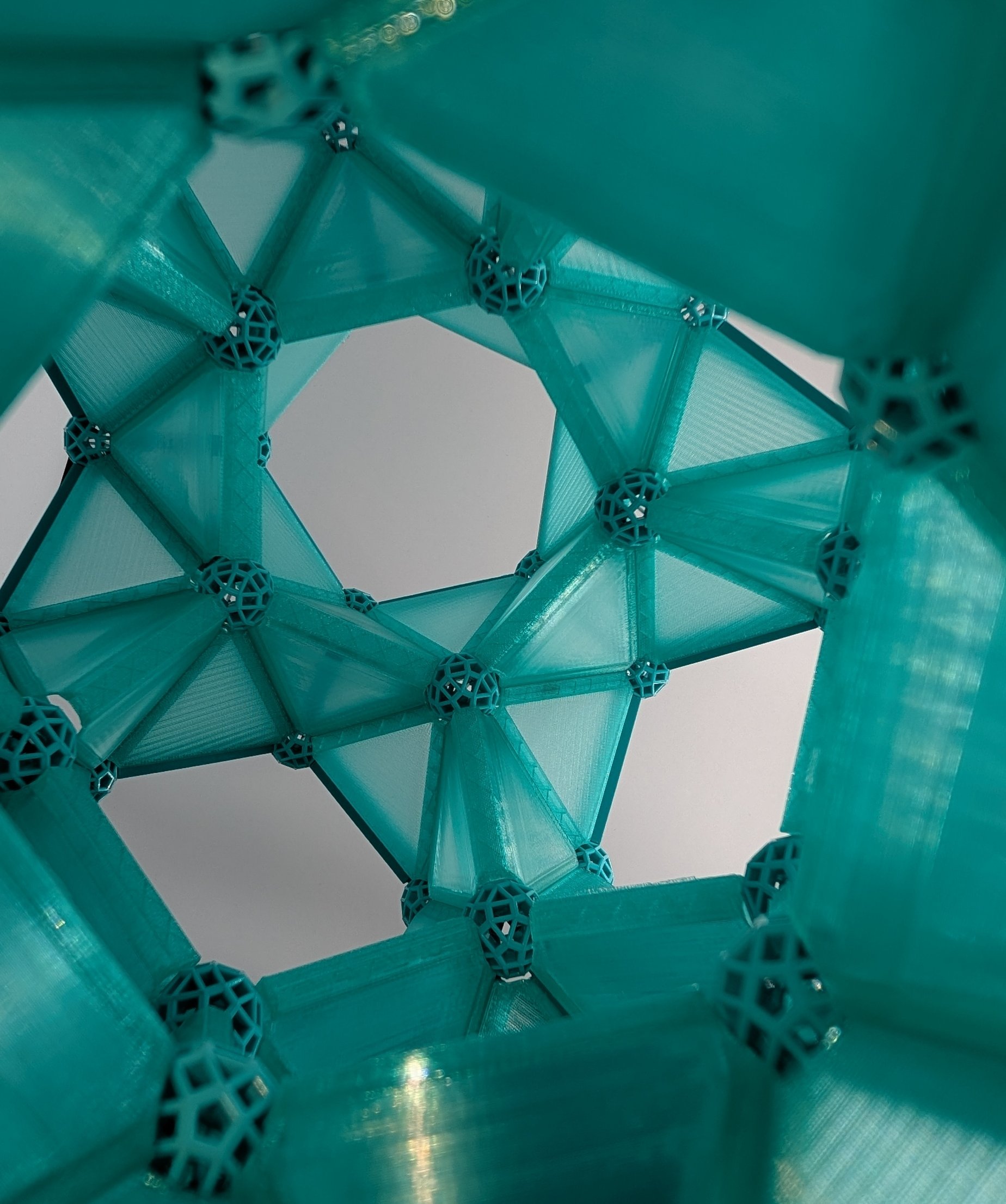
    Inner part of the model, view from the inside
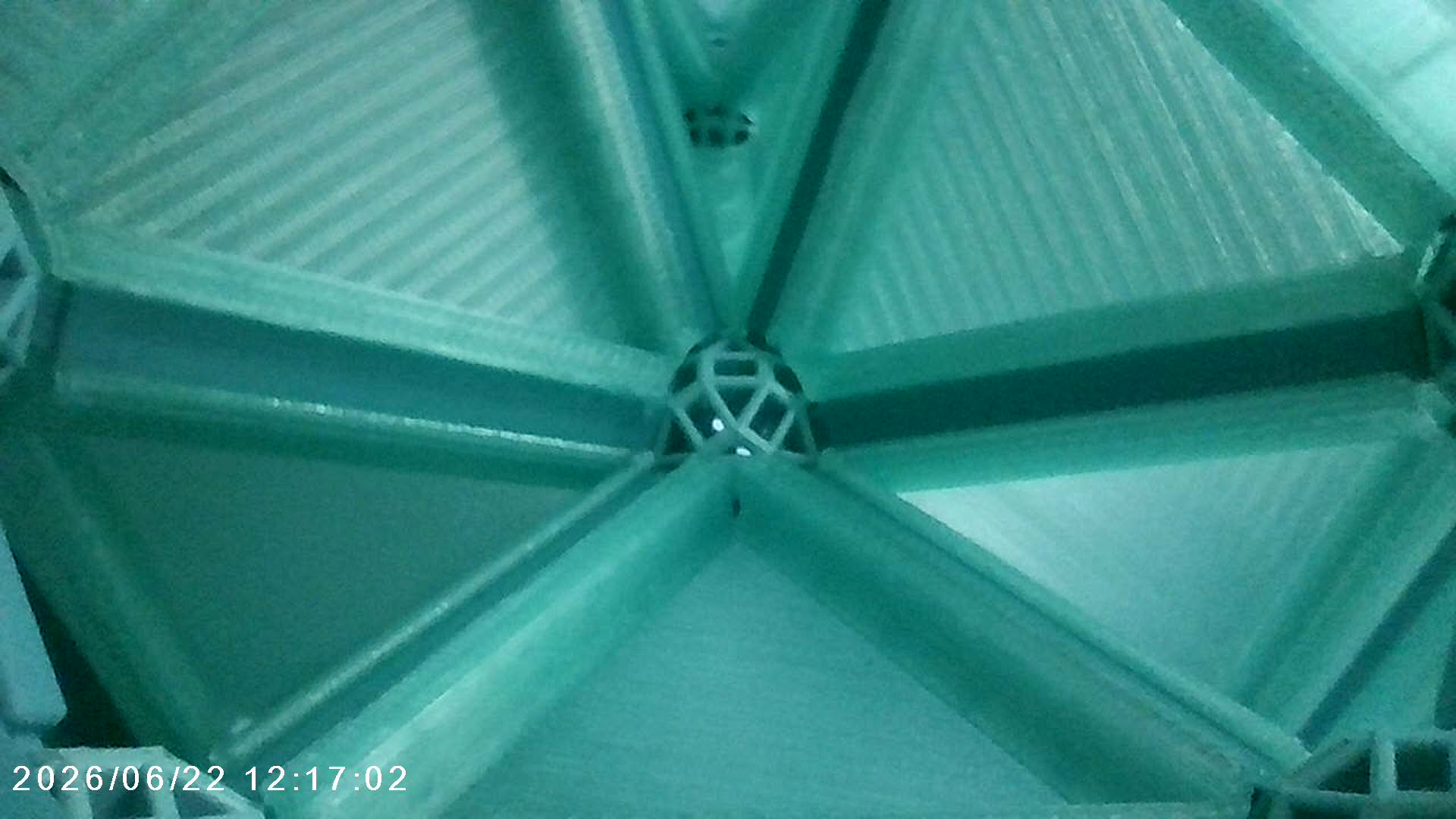
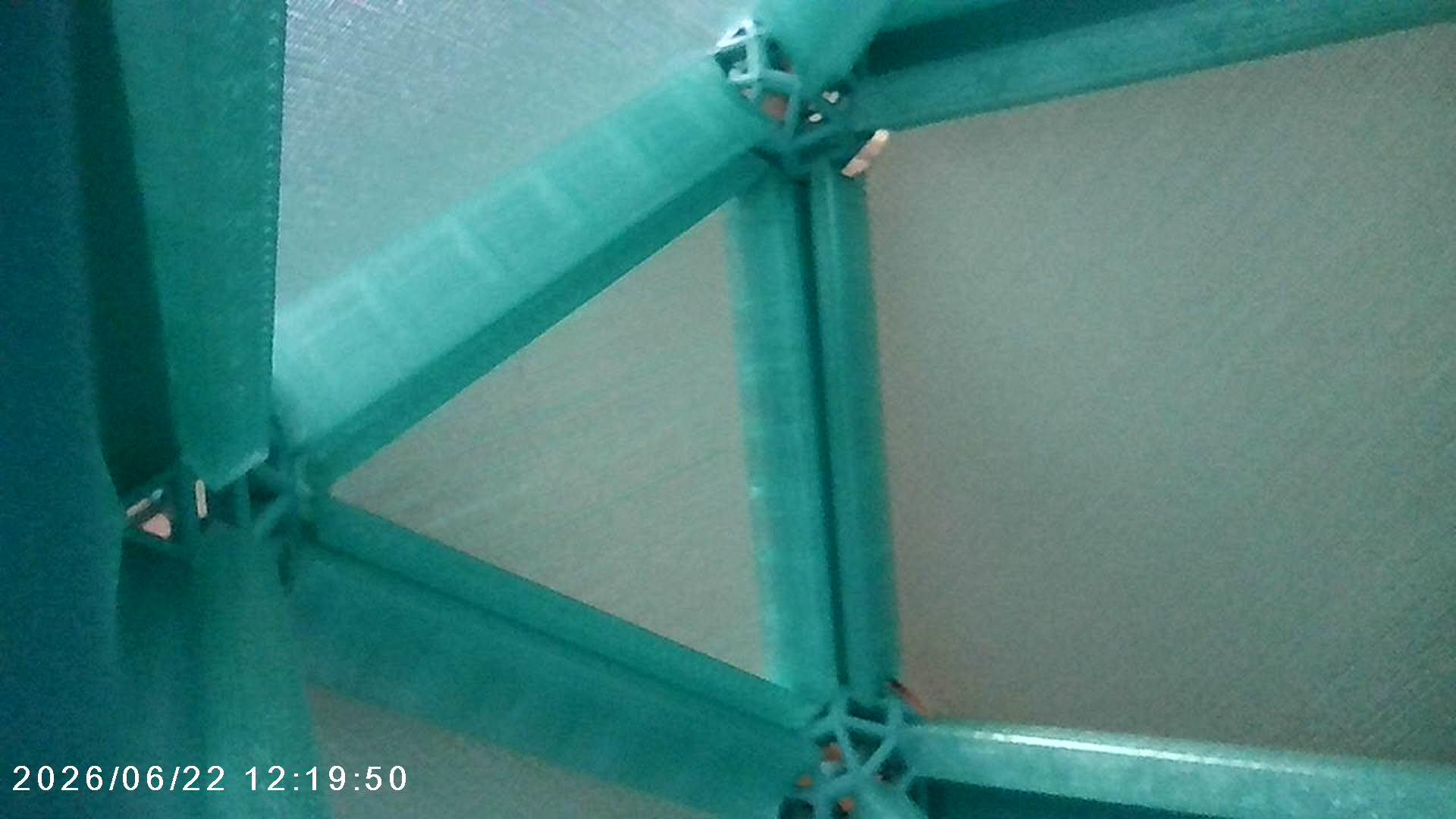
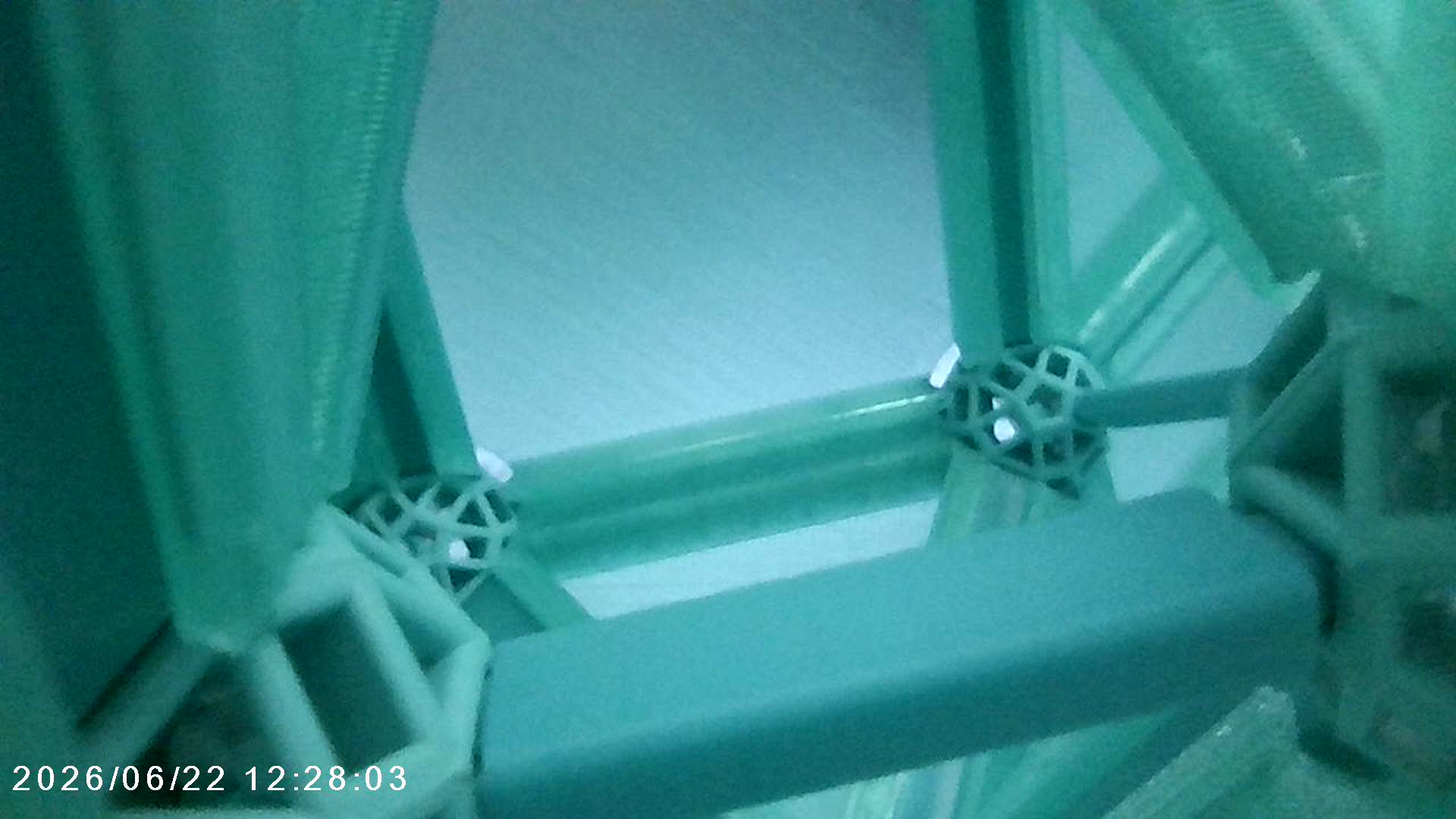
    and finally a view from the inside of the completed model:
    Completed model, view from the inside