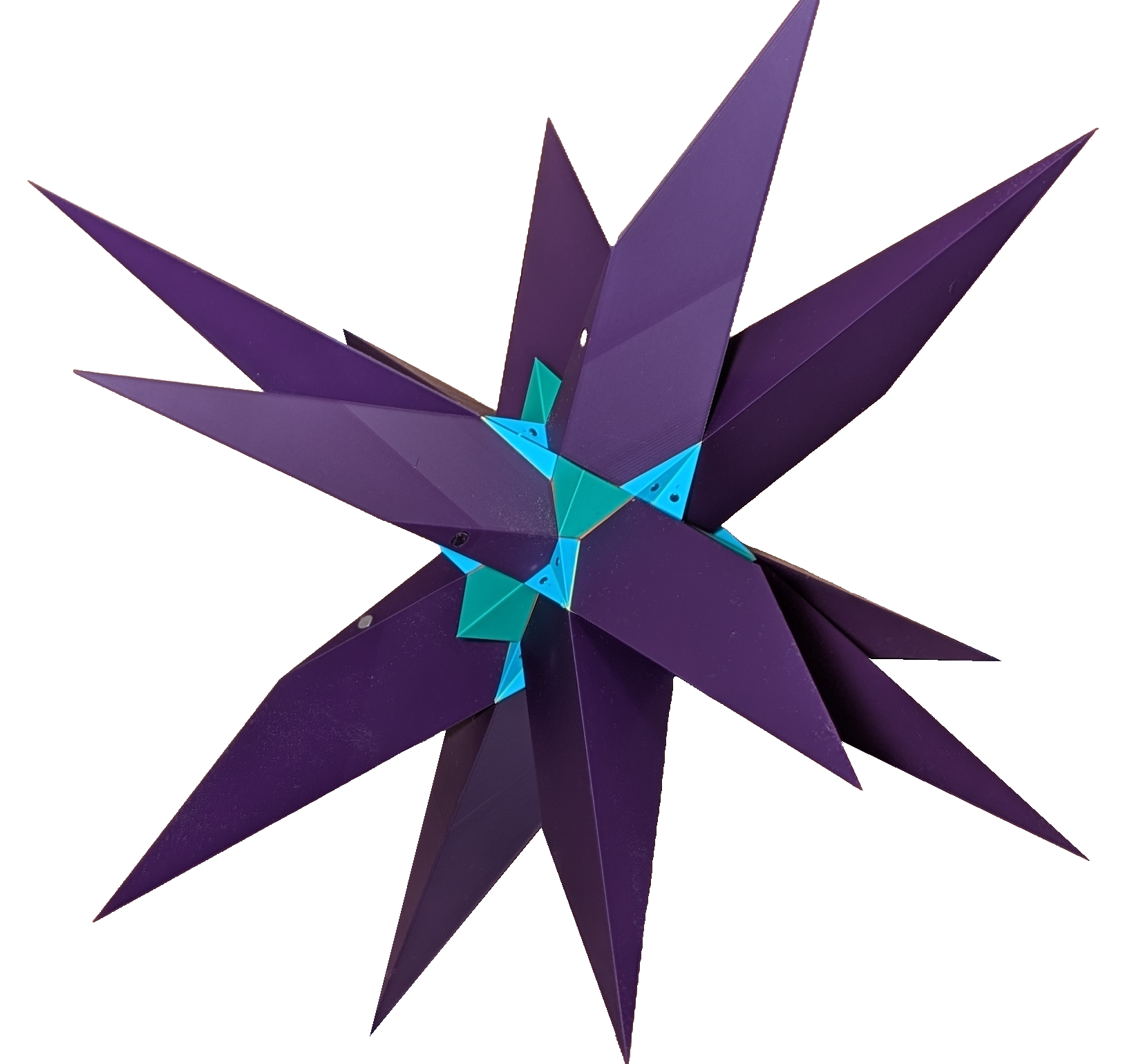
A regular Dodecahedron only has three stellations. When deforming the faces, reducing full icosahedral symmetry to pyritohedral symmetry, hundreds of stellations emerge, including 34 fully supported (14 reflexible and 20 pairs of chiral twins). The vZome model shows how each of these fully supported stellations can be build:
All these stellations can be constructed with standard Zometool blue struts and green orbit struts, mostly with non-standard lengths. Therefore I preferred to prepare a magnetic set of building blocks, able to construct at least each of the fully supported stellations. Ten different types of cells had to be designed: 4 reflexible and 3 pairs of chiral twins. The following photo’s show most of the fully supported stellations which do not involve cell types 9 or 10.
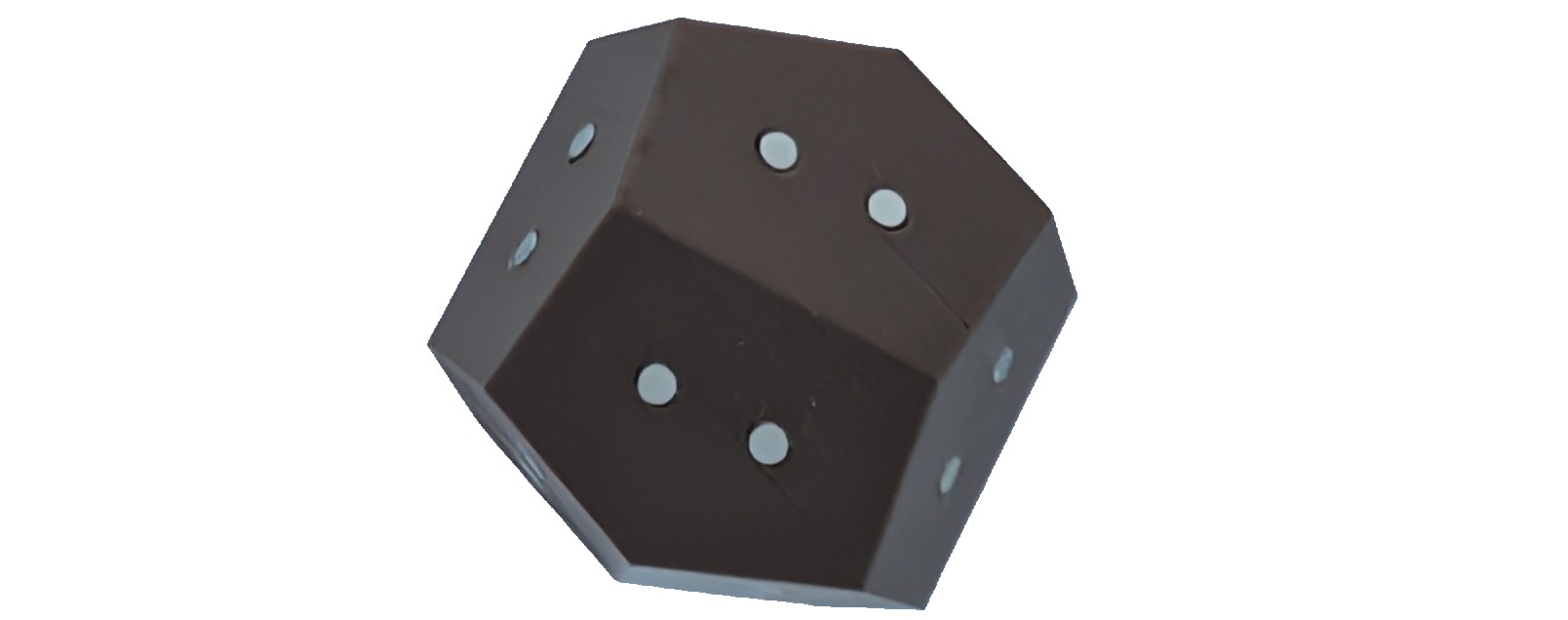
Starting with the kernel:
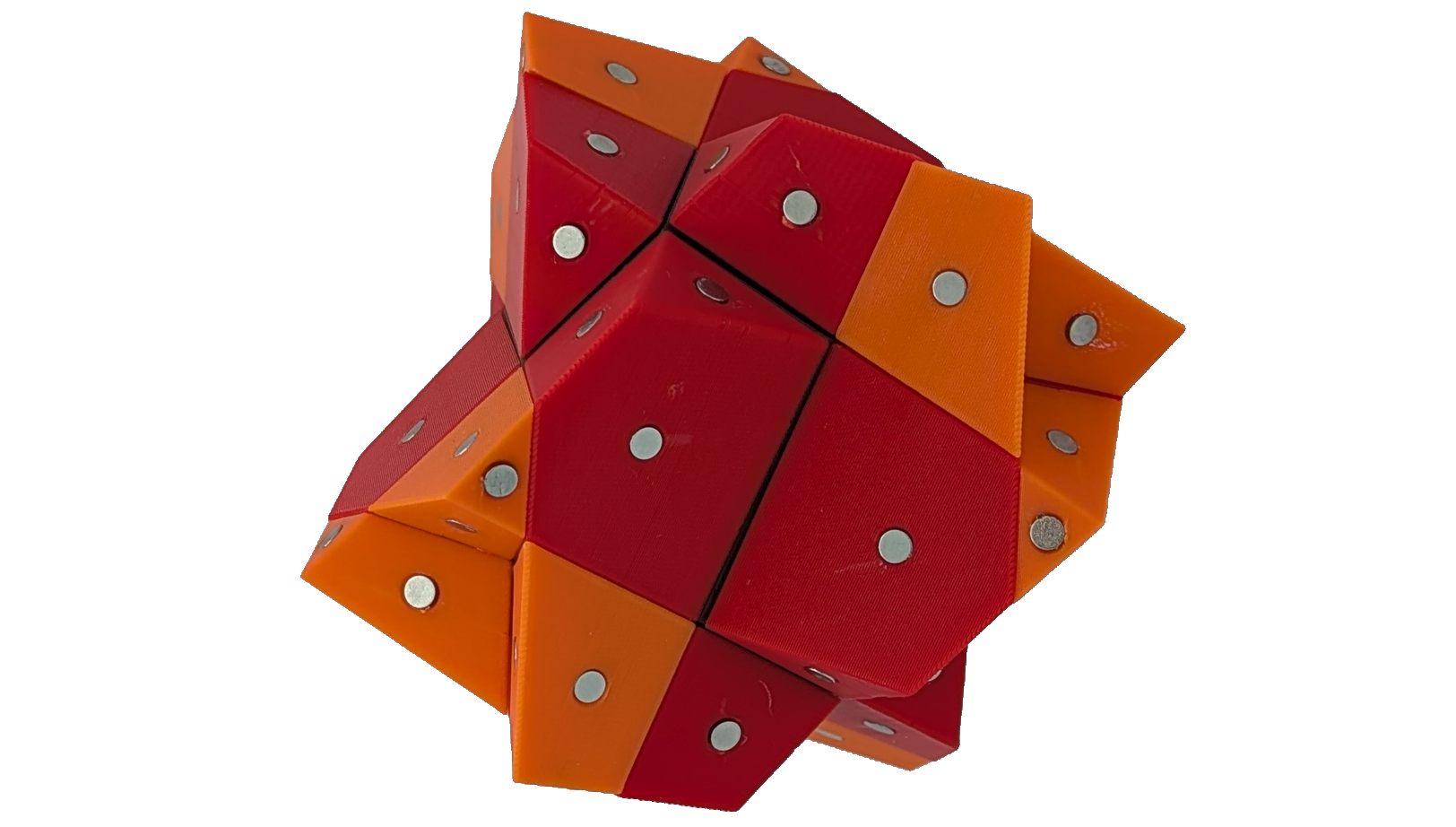
Introducing reflexible cell type 1 (red):

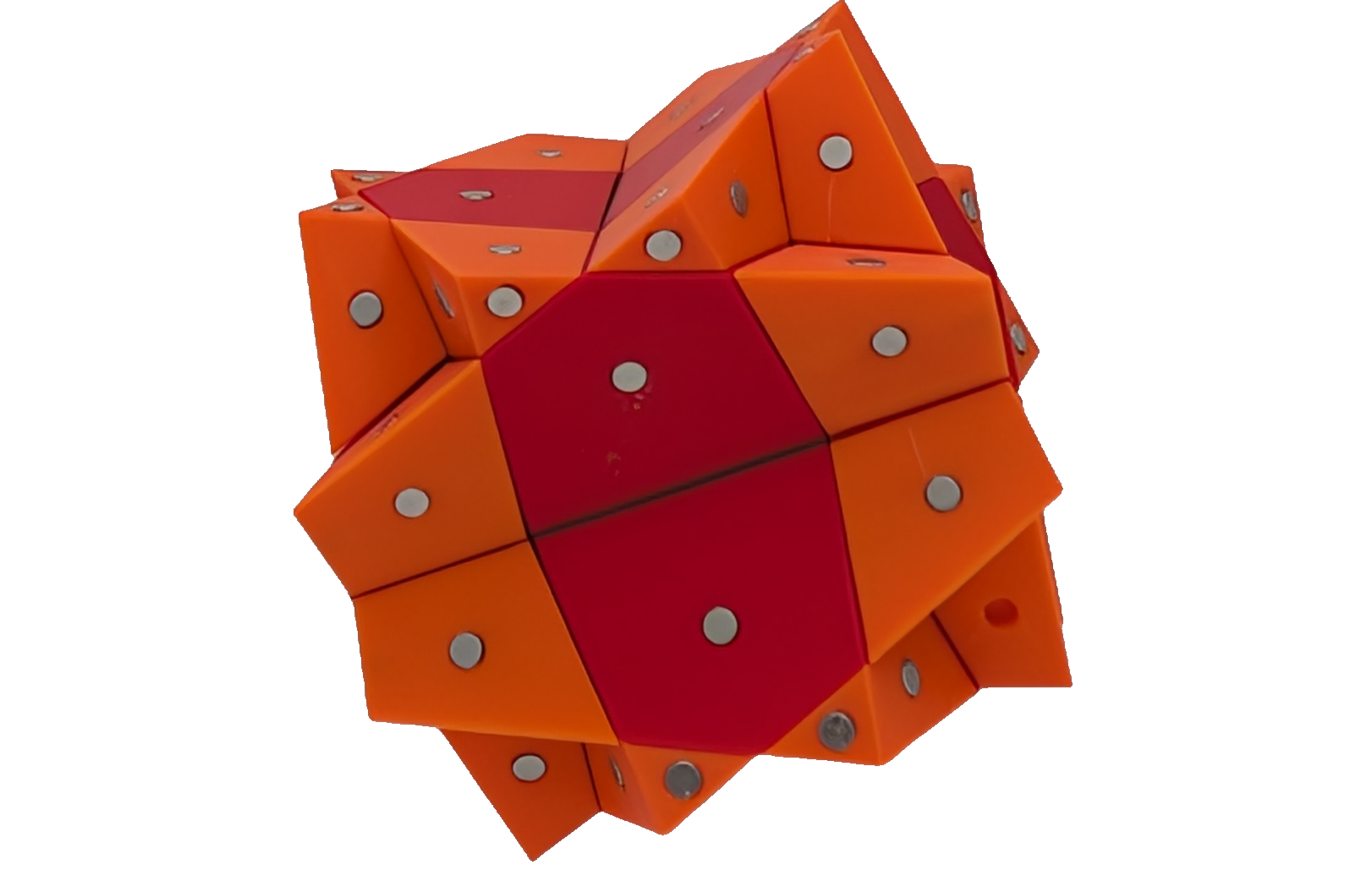
Introducing chiral cells type 2/3 (orange):
Introducing reflexible cell type 4 (yellow):
Introducing chiral cells type 5/6 (turquoise):
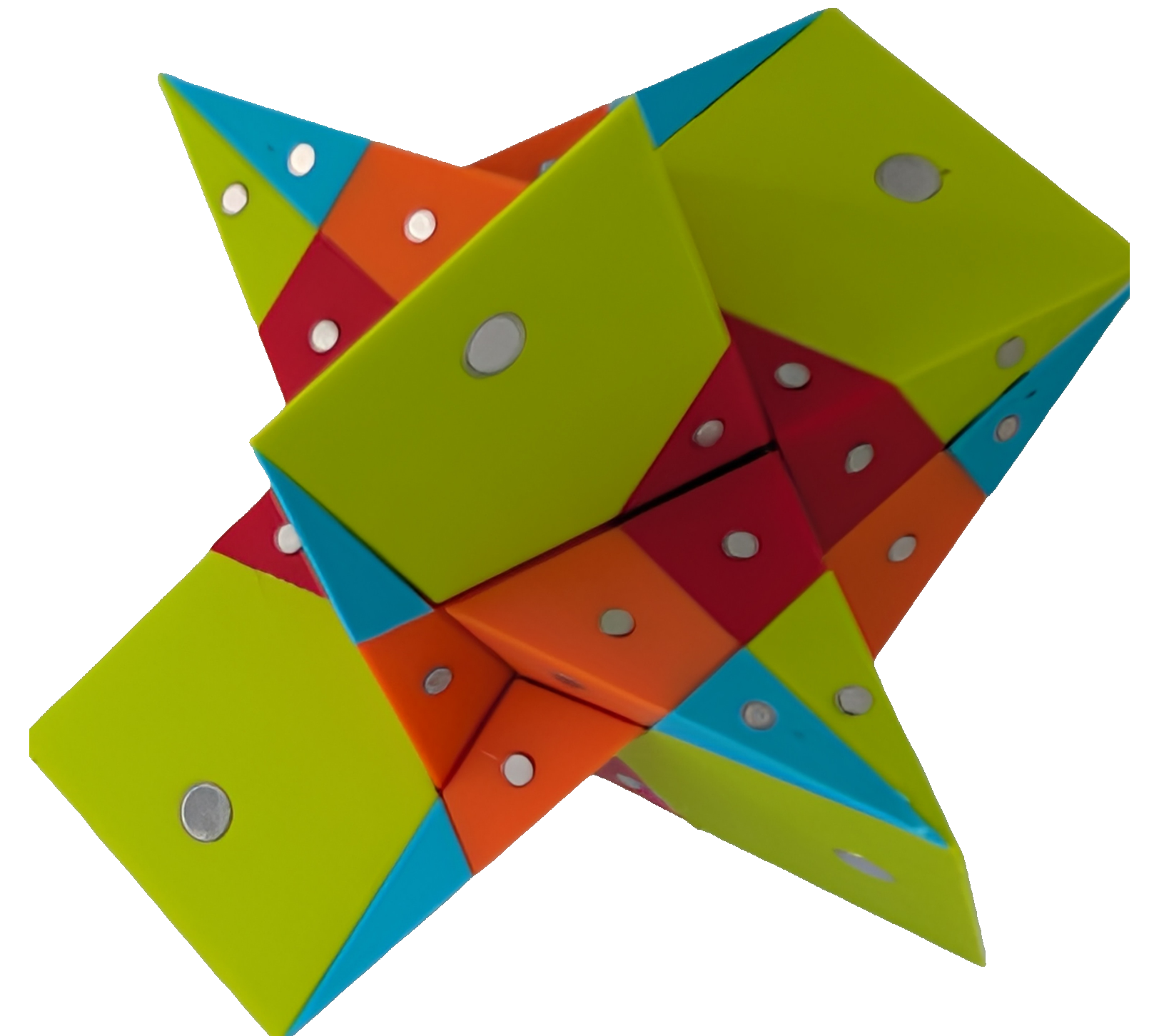
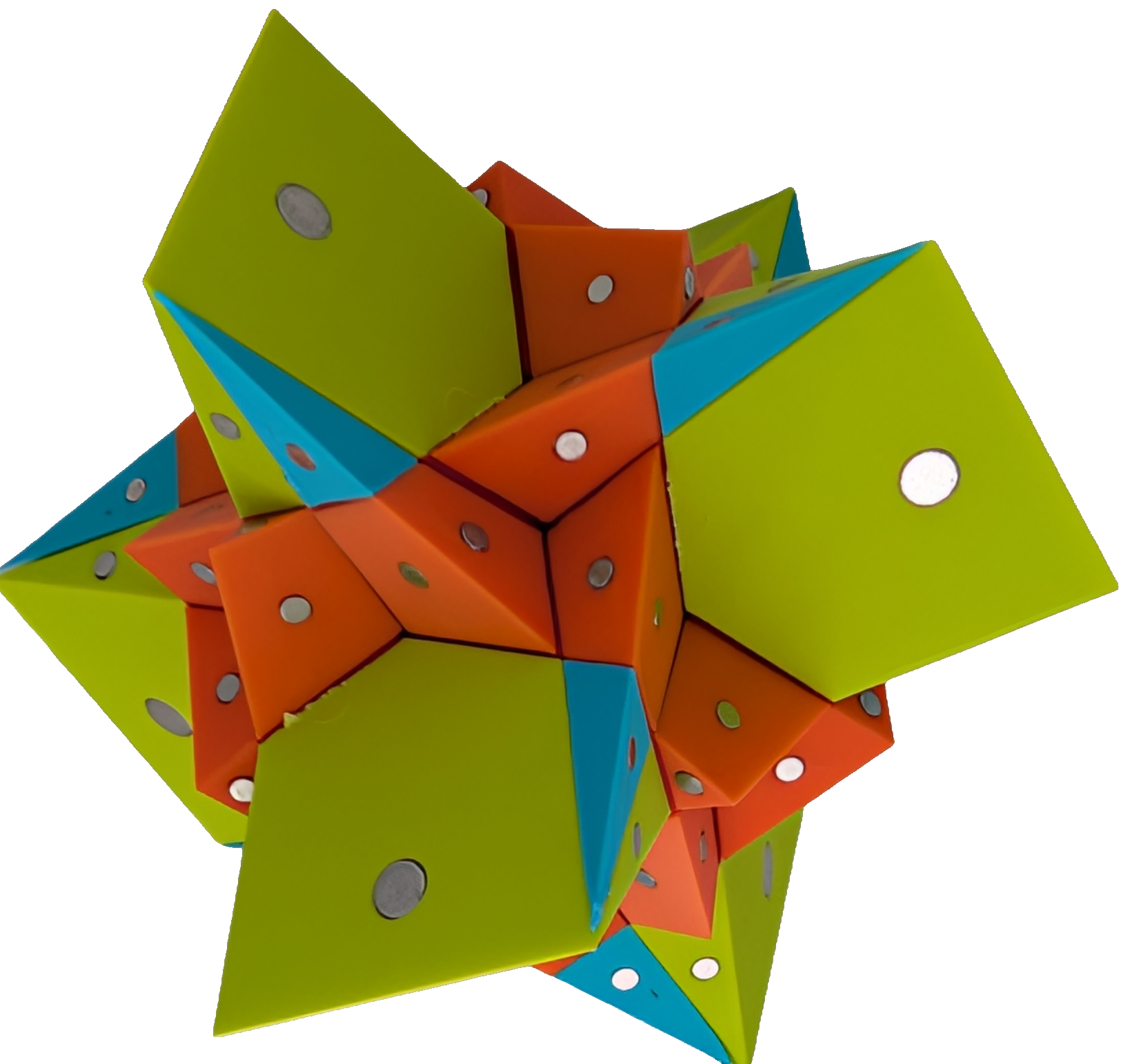
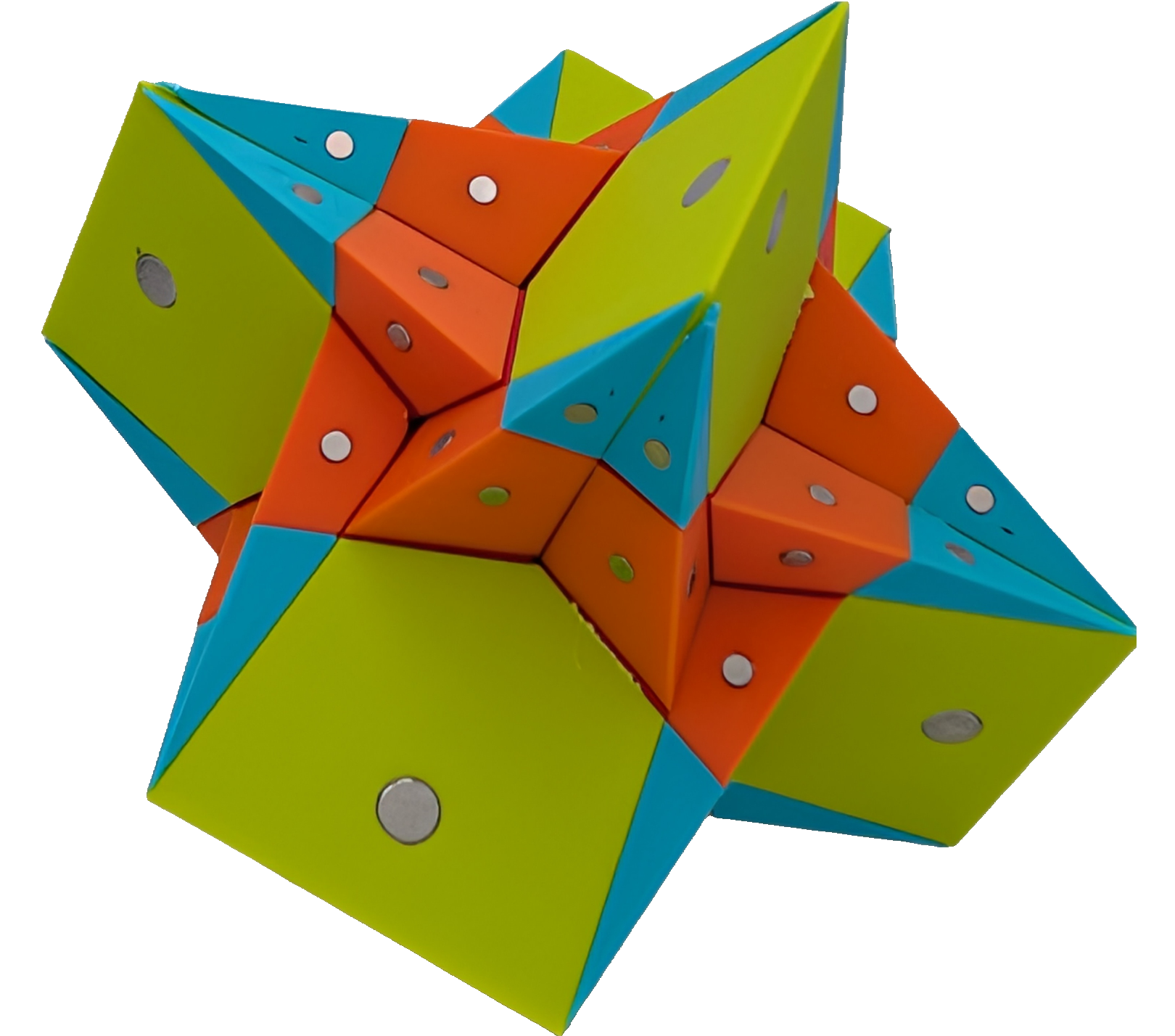
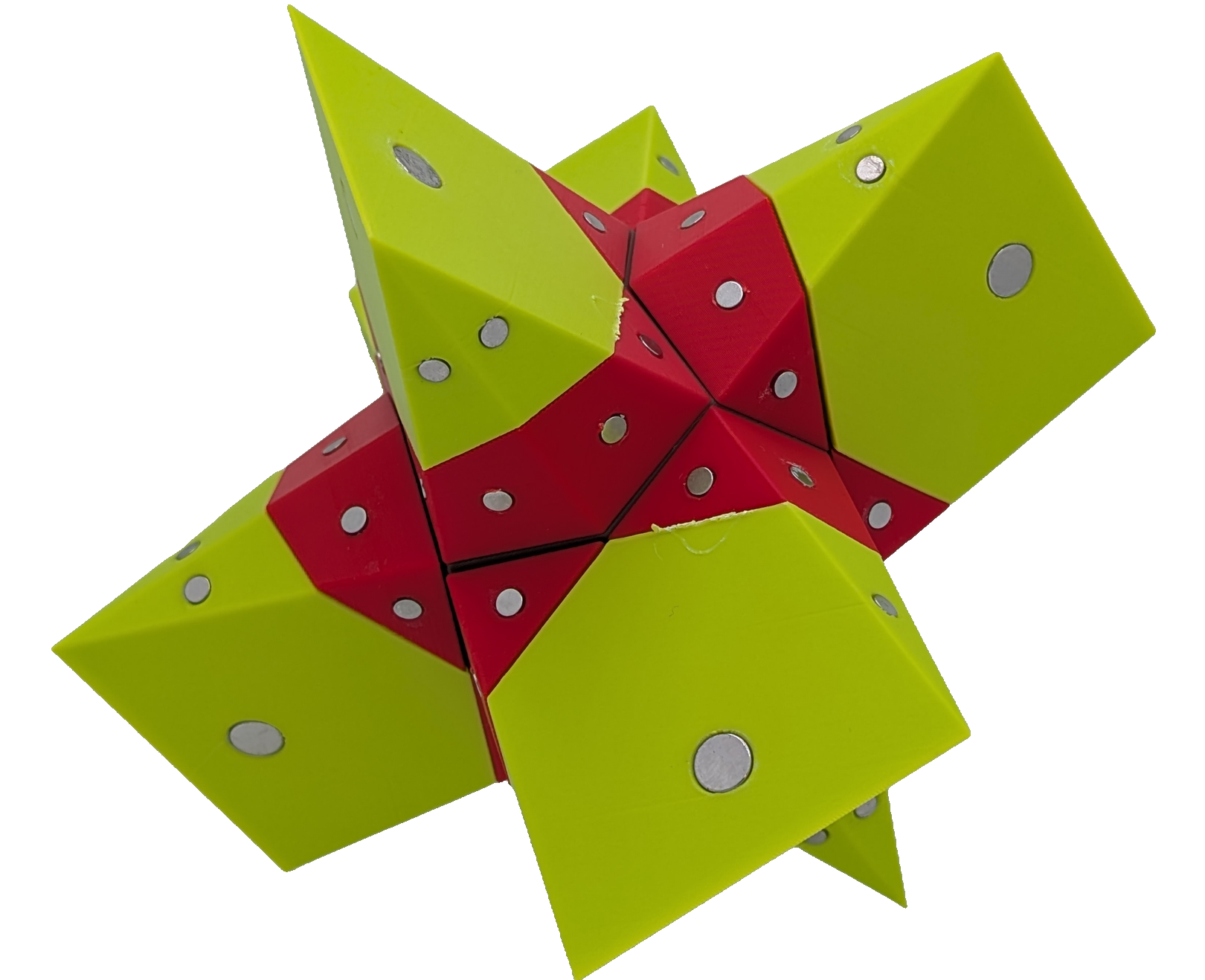
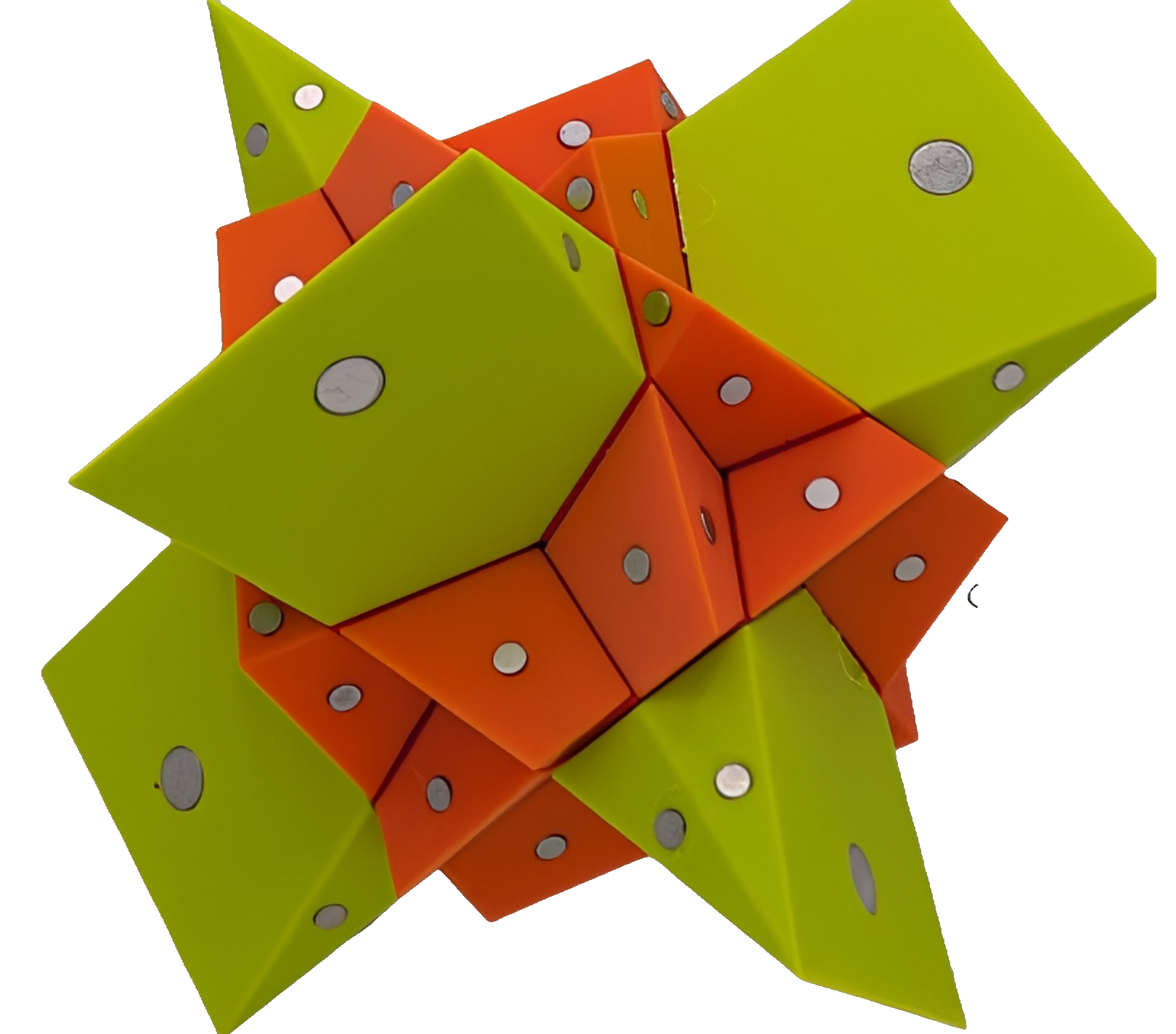
Introducing chiral cells type 7/8 (green):
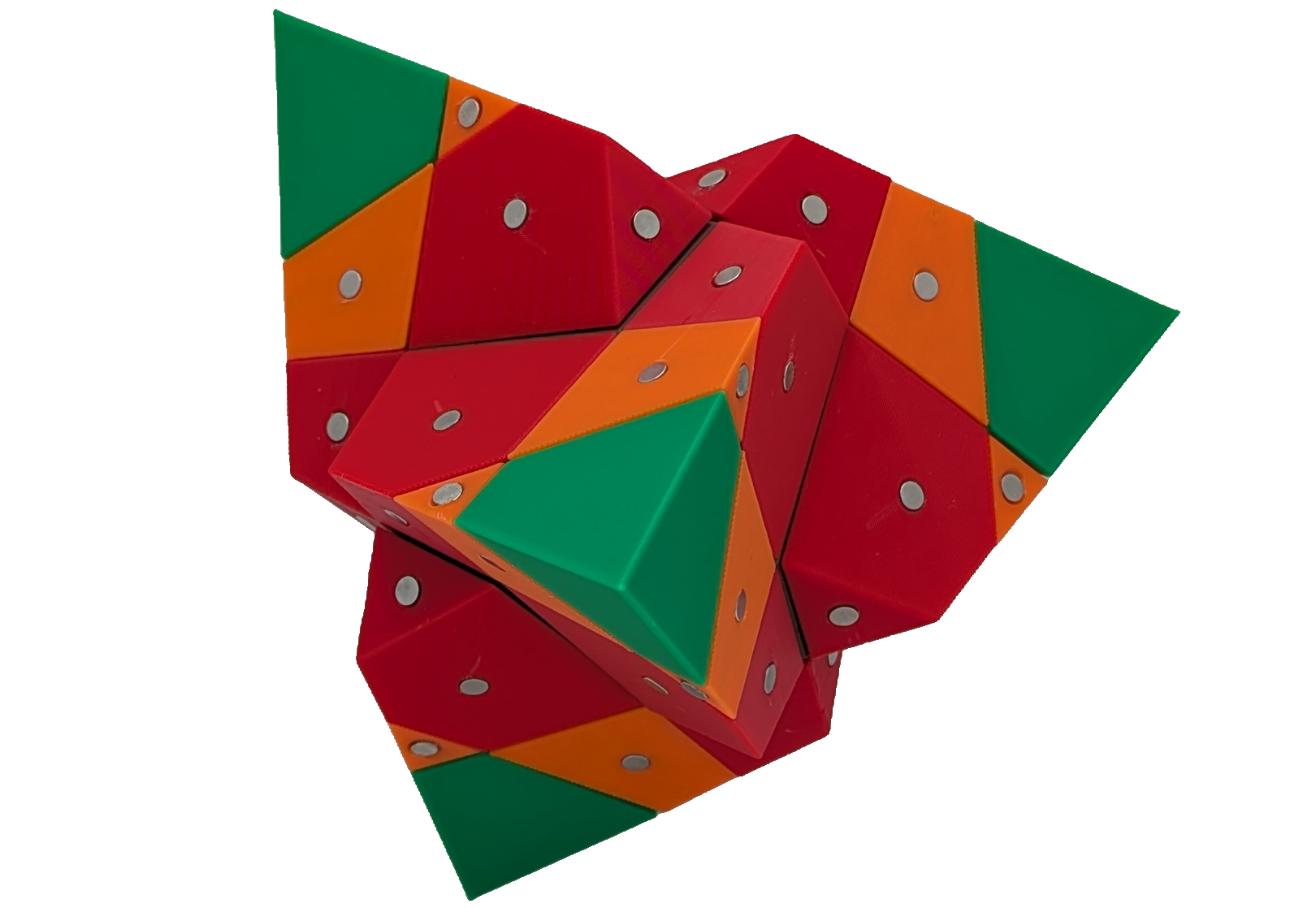
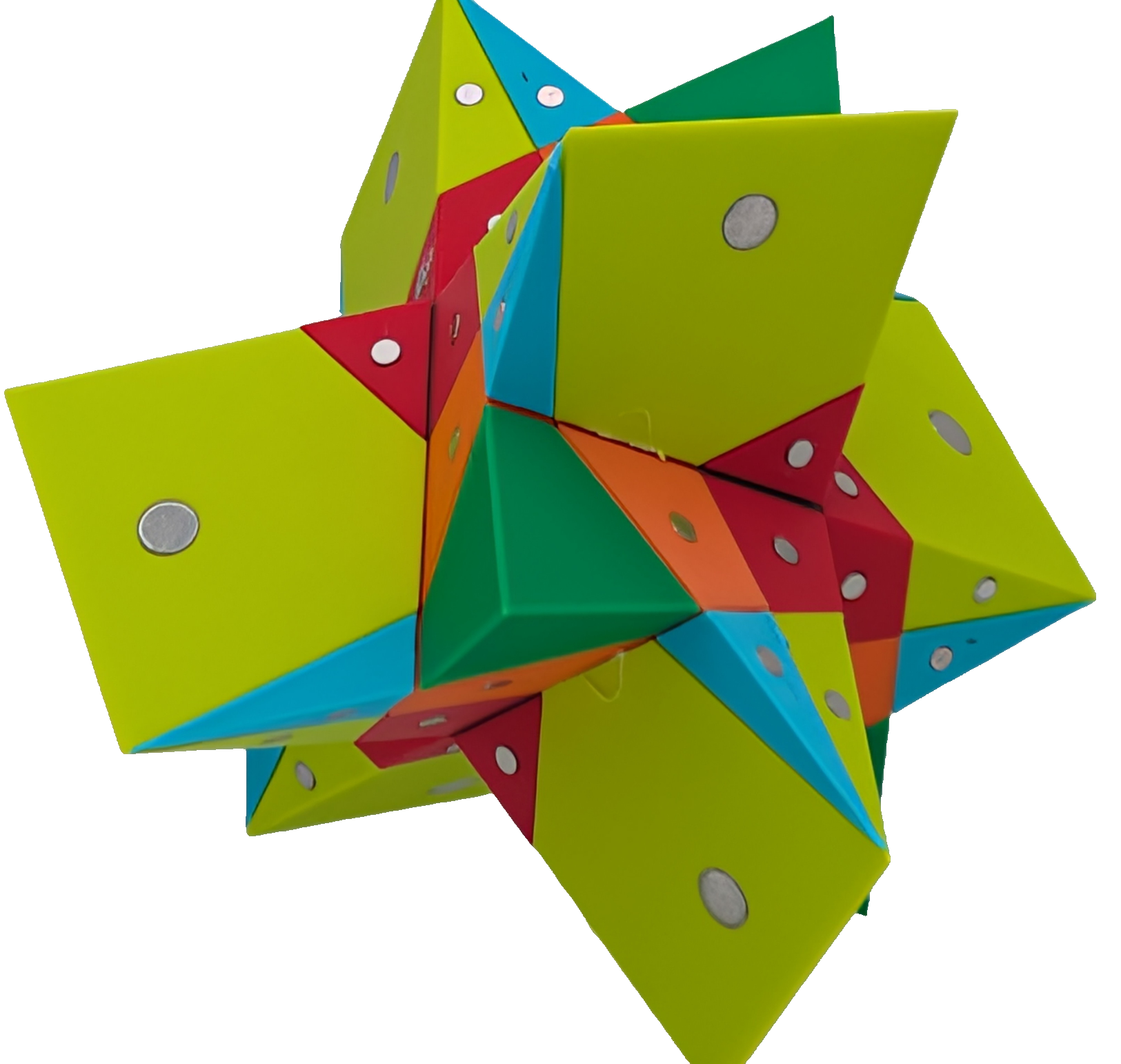
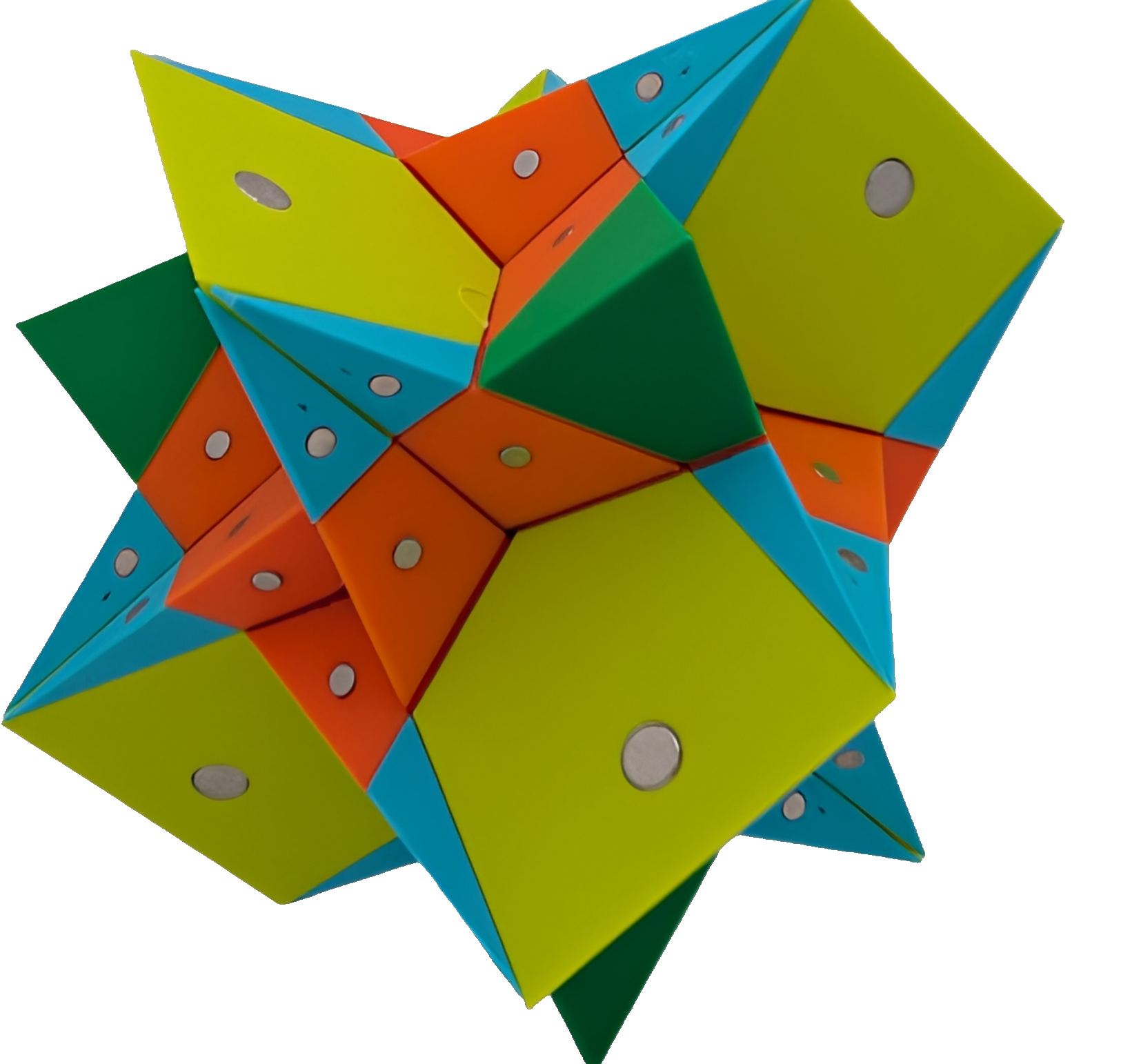
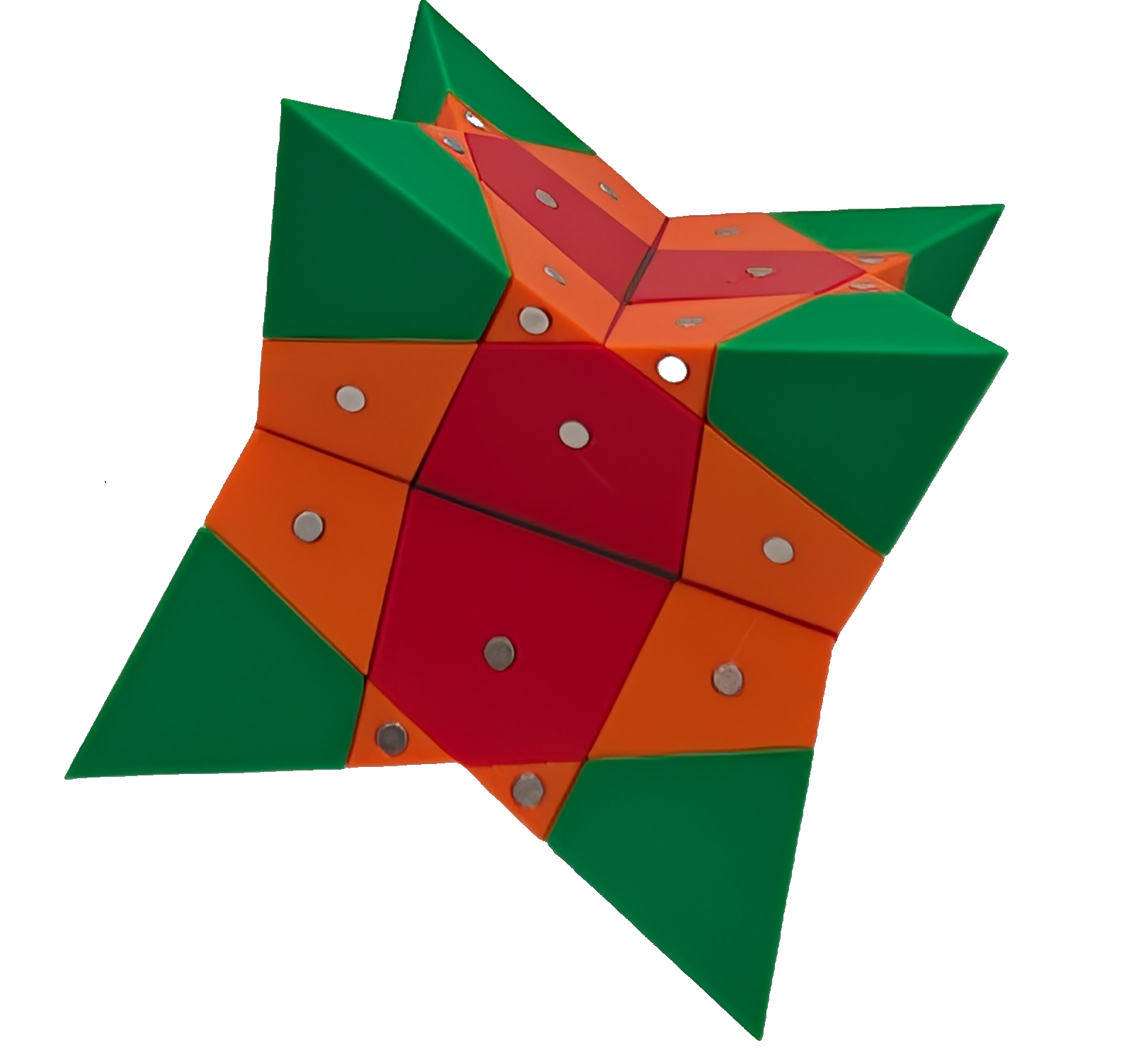
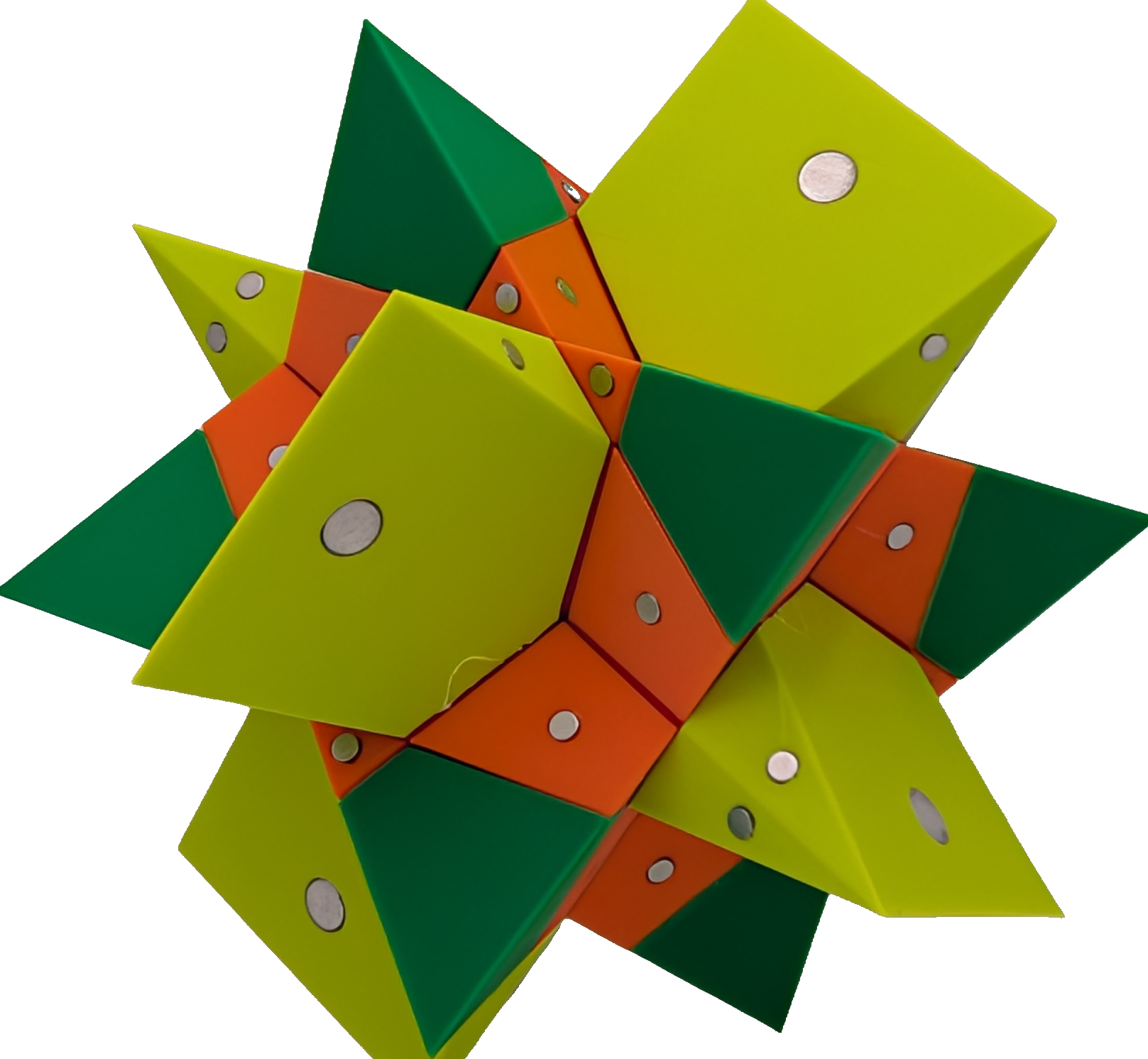
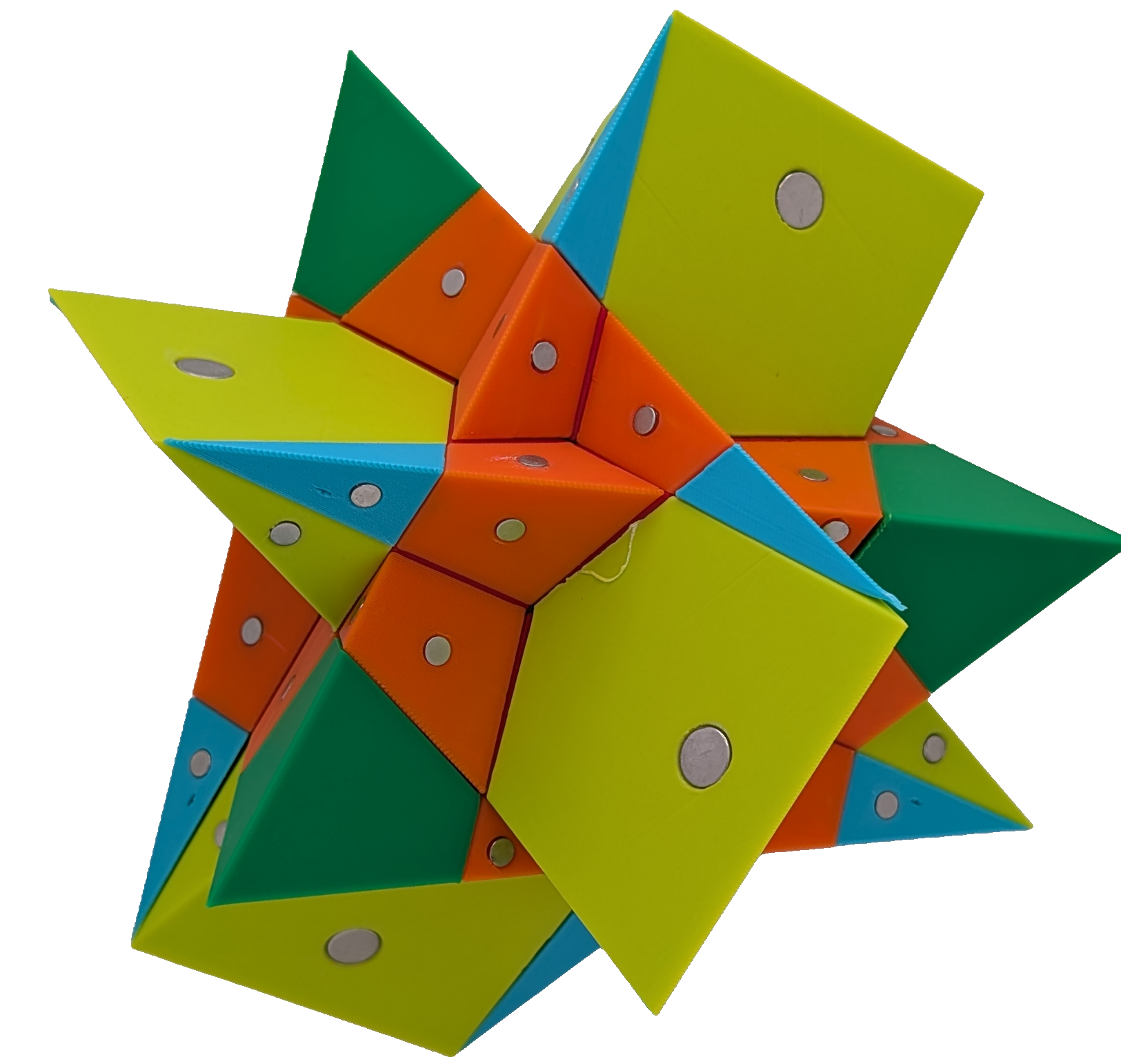
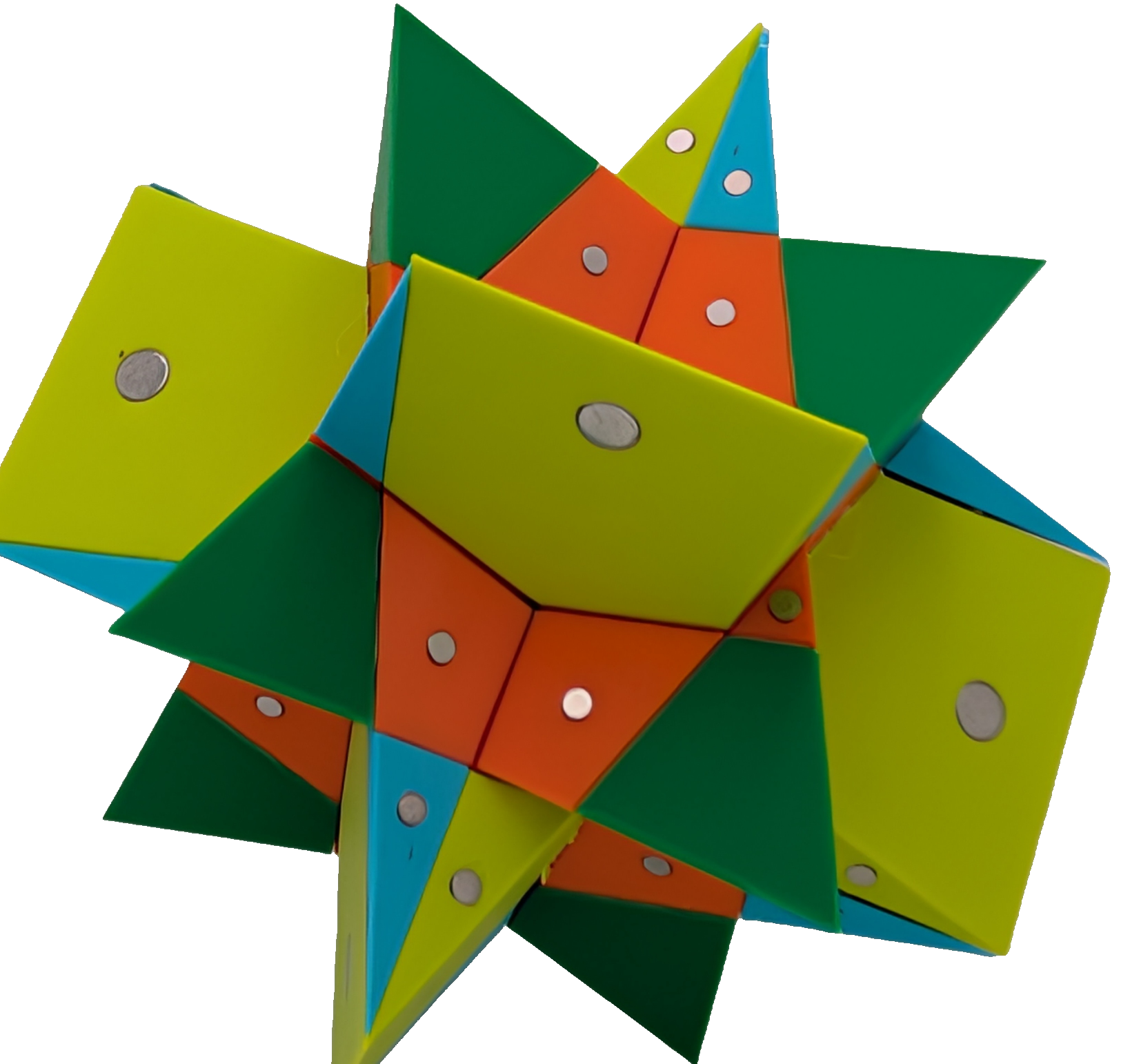
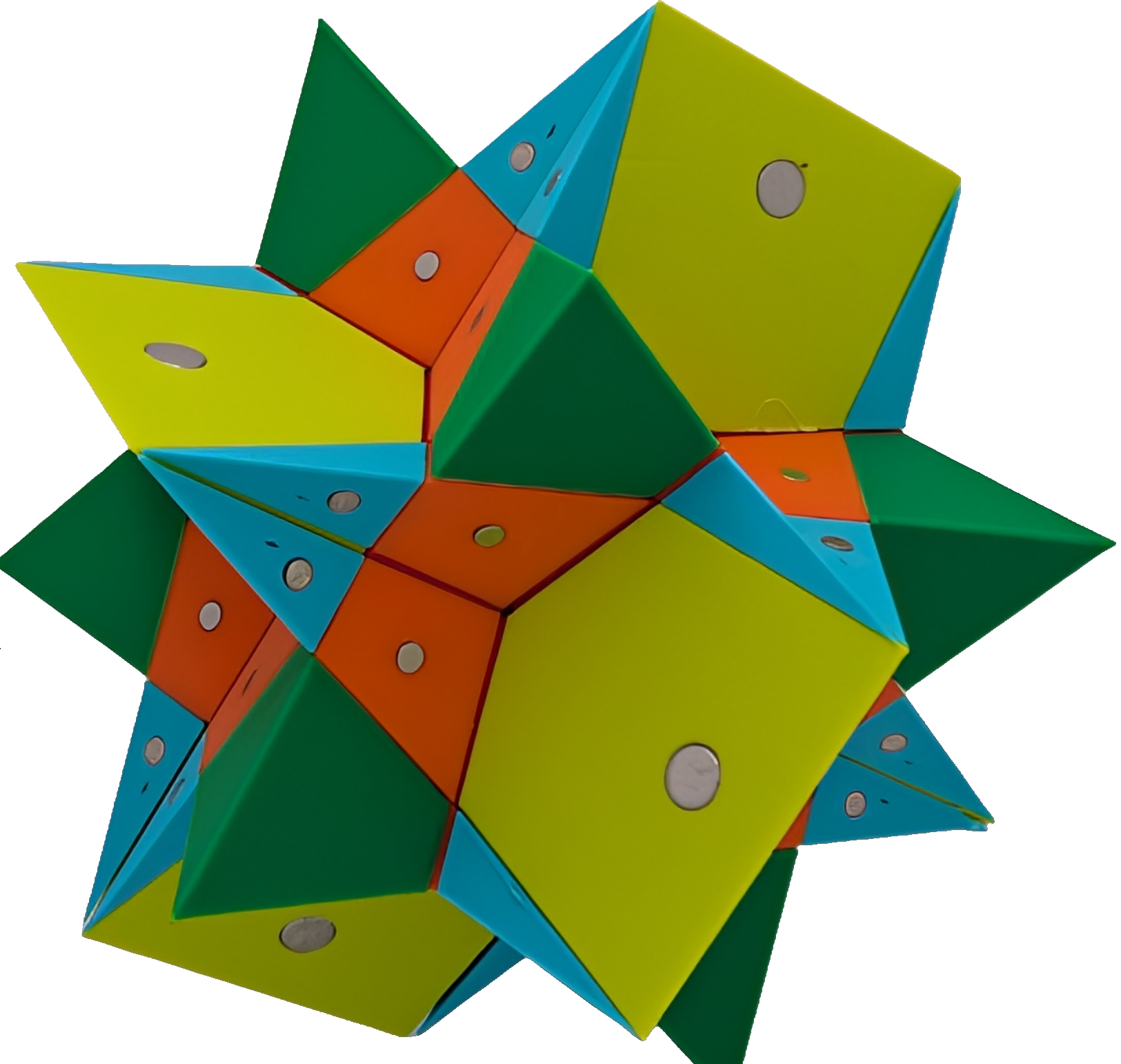
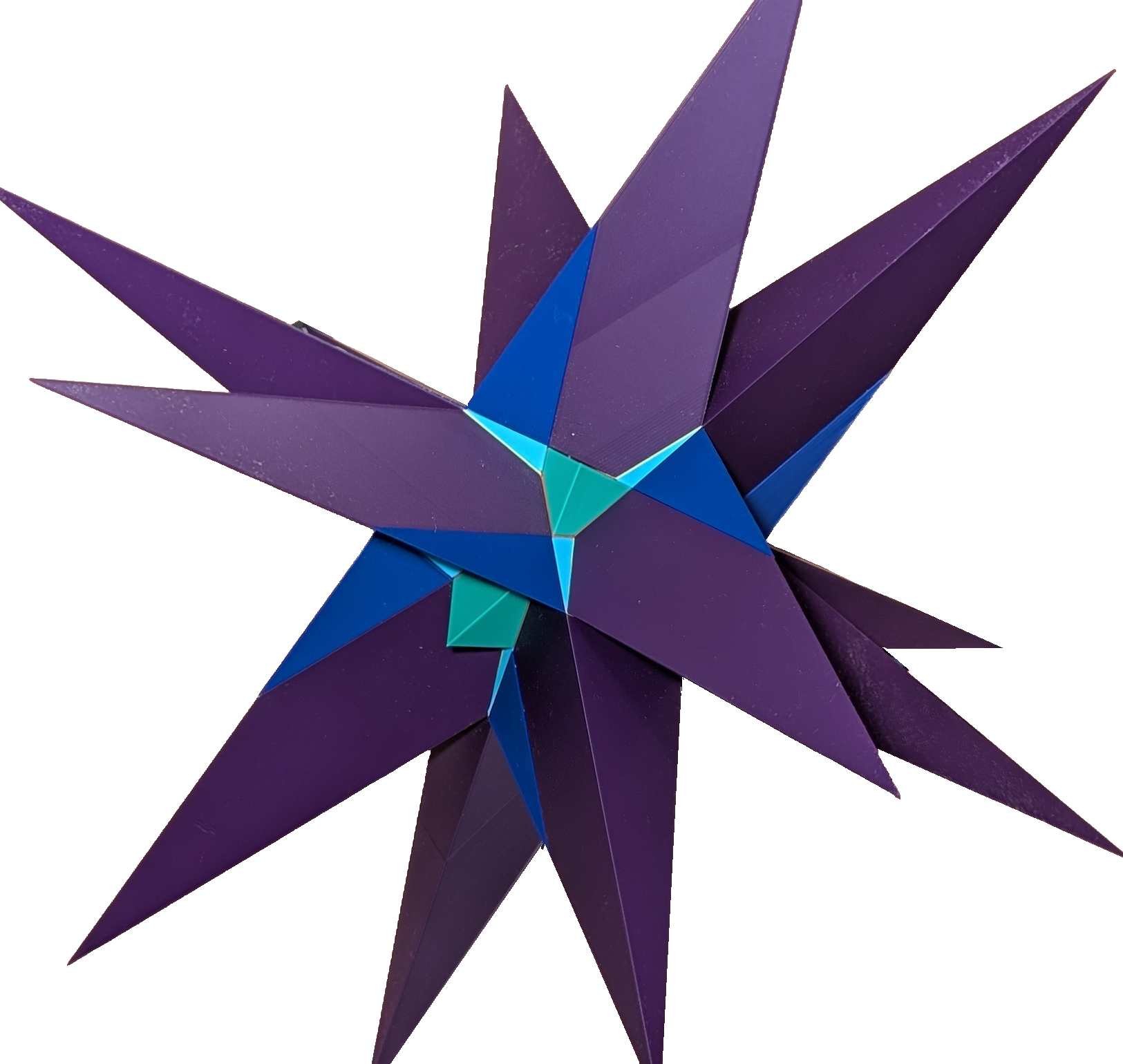
The set of cells of types 9 cover almost the whole visible surface. Therefore it is difficult to distinguish the difference between stellations which involve cell type 9 (purple). The last two stellations differ from each other in using cell type 10 (blue), or not: