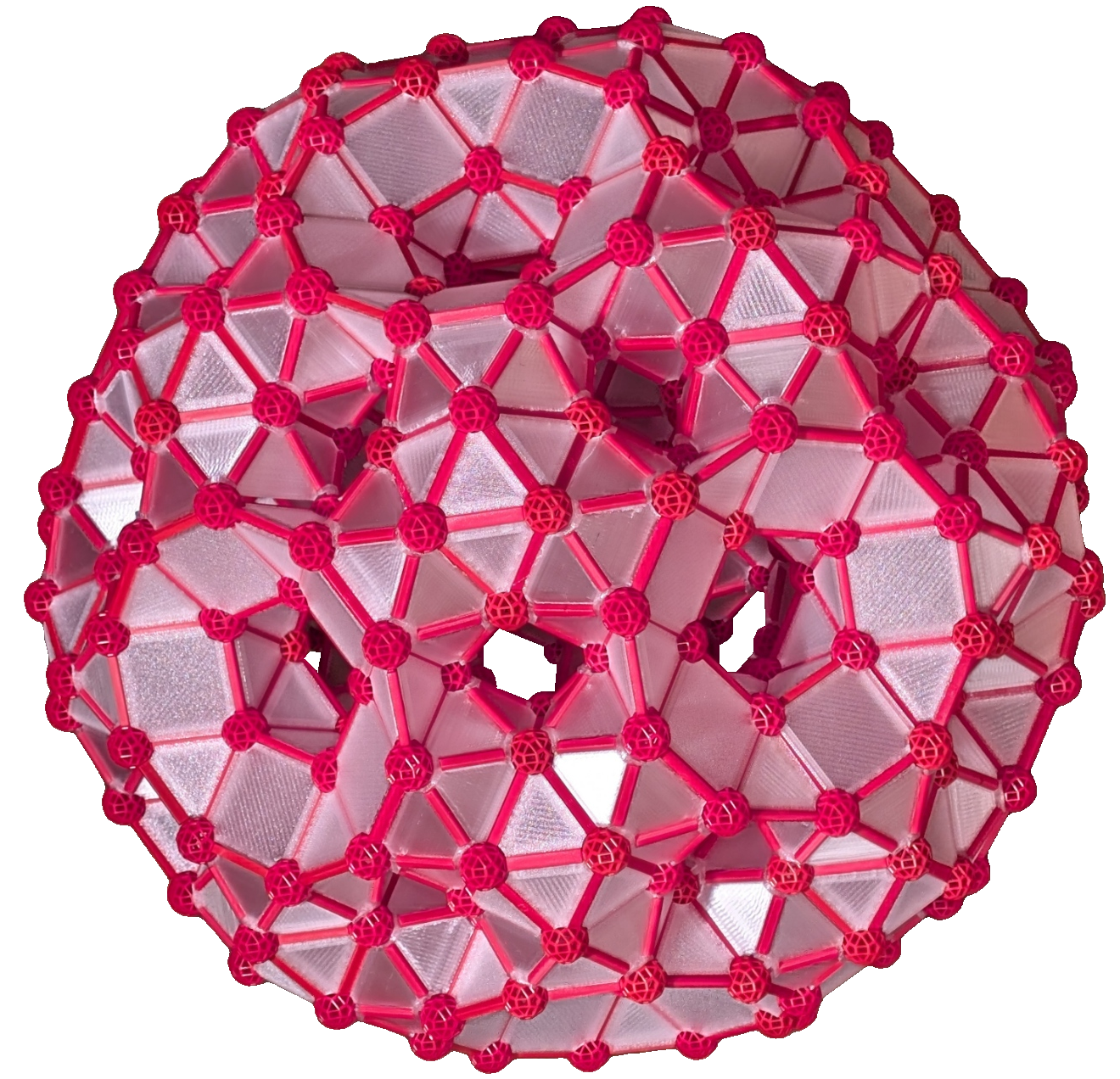
The Cupola Drilled Truncated Icosahedron connects drilled objects around the twelve 5-fold axes by twenty objects around the 3-fold axes. This results in a Stewart Toroid with genus 11, which can be verified by:

genus = 1 + (#edges-#vertices-#faces)/2 → 1+(600-240-340)/2 = 11

The first vZome model shows how Robert Webb replaces each object around a 3-fold axis (coloured in green) by an object (coloured in red) composed out of a tridiminished icosahedron (J63) extended with 3 pentagonal antiprisms.
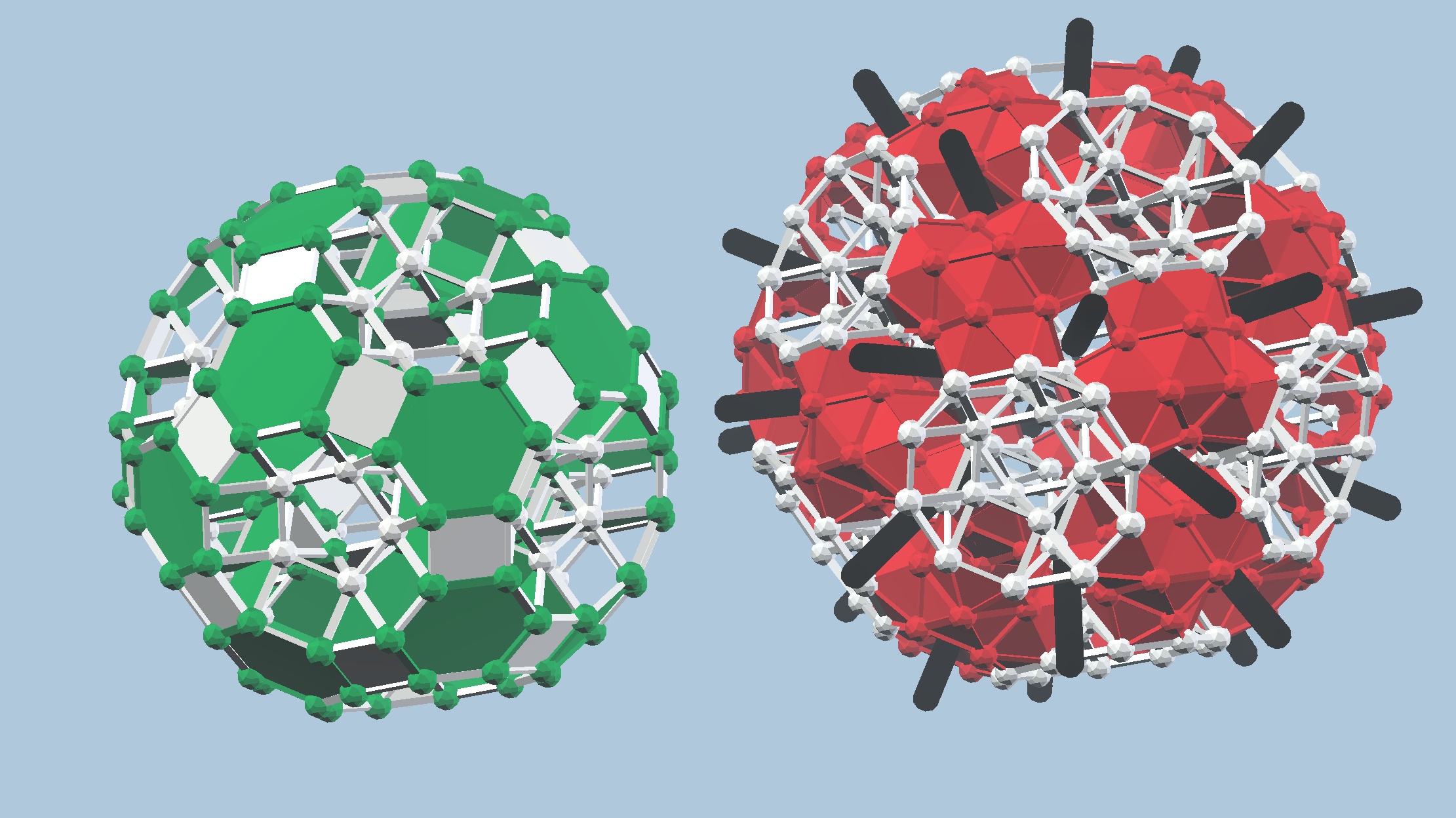
Genus-11 vs. Genus-41 Toroid
This construction creates a new hole around each 2-fold axis (coloured in black), thus increasing the genus by 30 to 41. This can be verified by:

genus = 1 + (#edges-#vertices-#faces)/2 → 1+(1620-480-1060)/2 = 41

At first glance, building a Zometool model could be done with blue struts only. However, a blue-orbit pentagonal antiprism has wrongly oriented edges for this particular model:
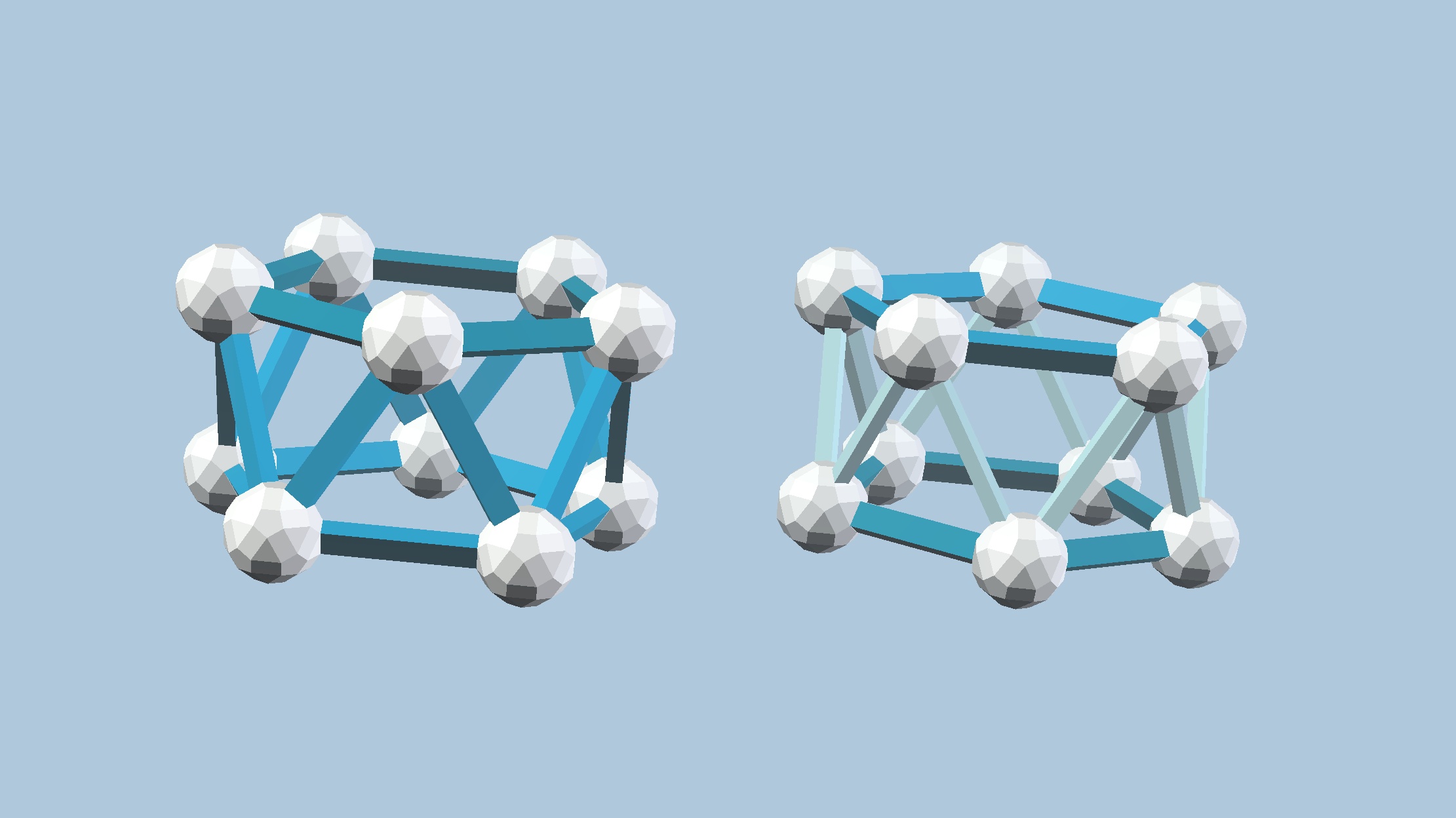
Blue-orbit vs. required Pentagonal Antiprism
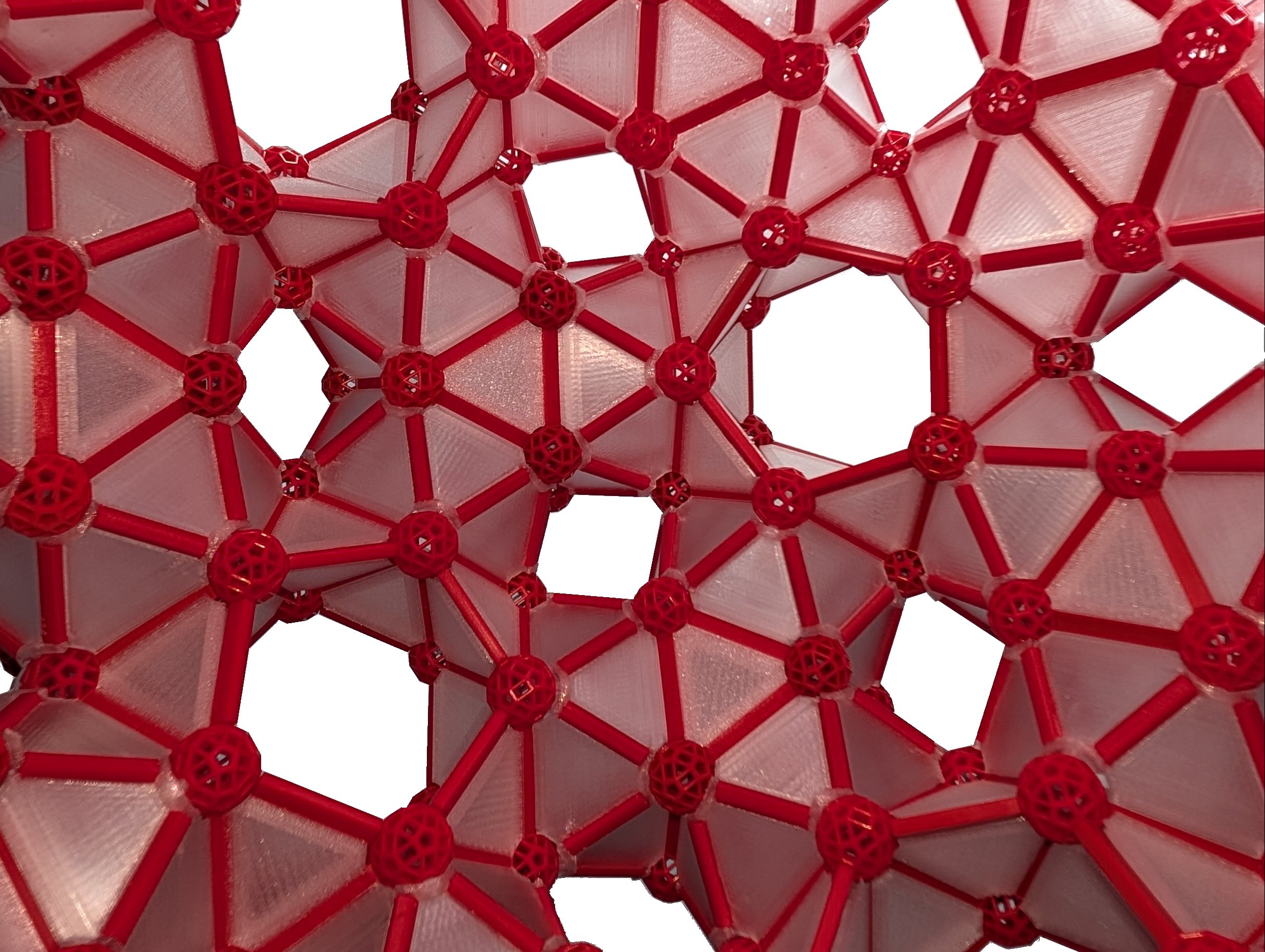
Instead of 3D printing ten custom-made struts and ten triangular panels for each pentagonal antiprism, I designed a monolithical object. 3D-printed in two colours, it clearly emphasises the edges versus the translucent panels. The spherical cap segments both redirect the pins of the struts to pentagonal holes of the Zometool connectors and serve as structural reinforcements. By this, the resulting Zometool model, still requiring 1020 standard b0 struts and 480 connectors, is very rigid:
Zometool model, viewed from the inside
Zometool model, viewed from the outside
Some endoscopic pictures are also available.

Robert Webb proposes to extend each pentagonal antiprism connected to a J63 further by an additional pentagonal prism.
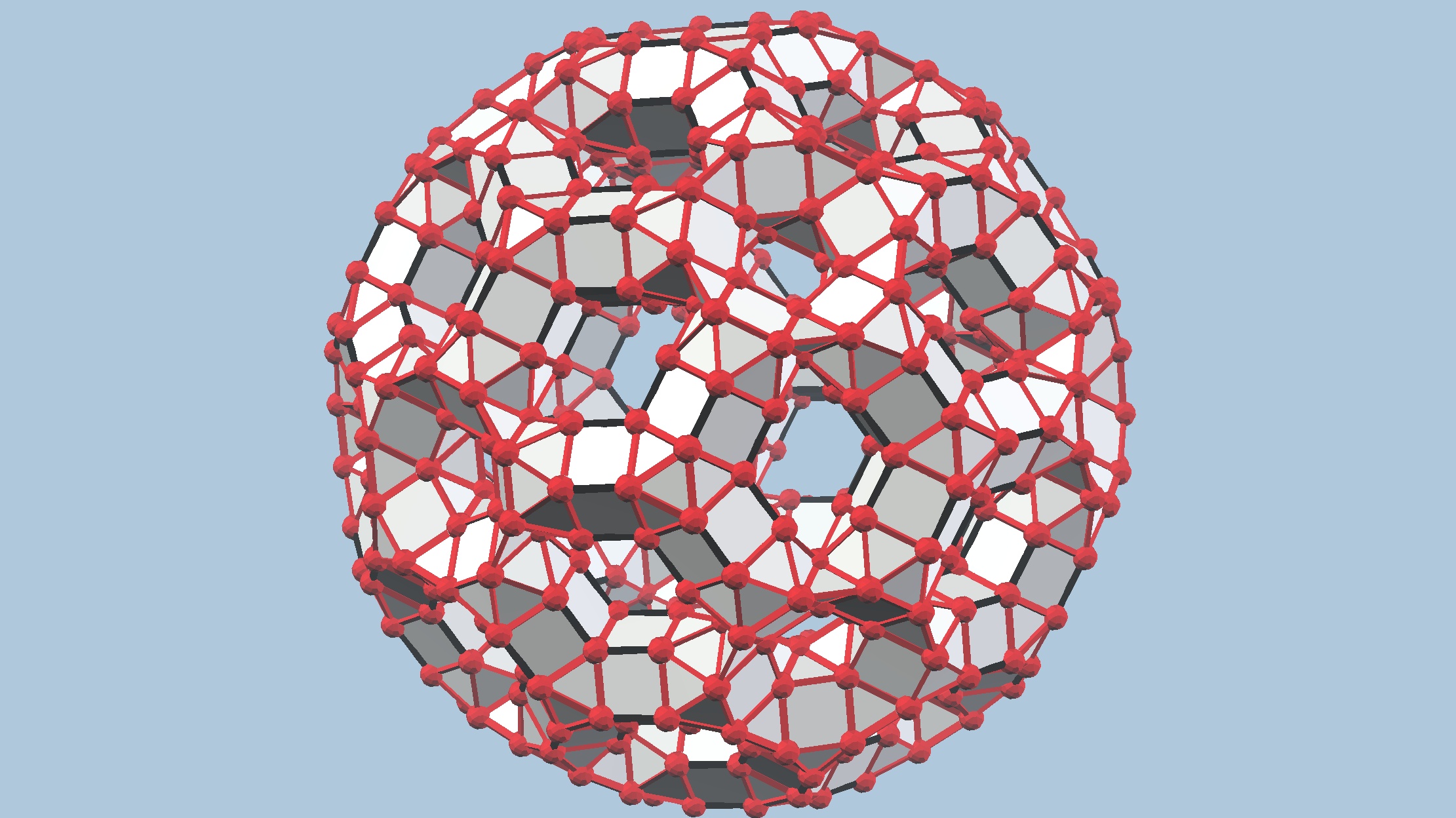
Extended Toroid
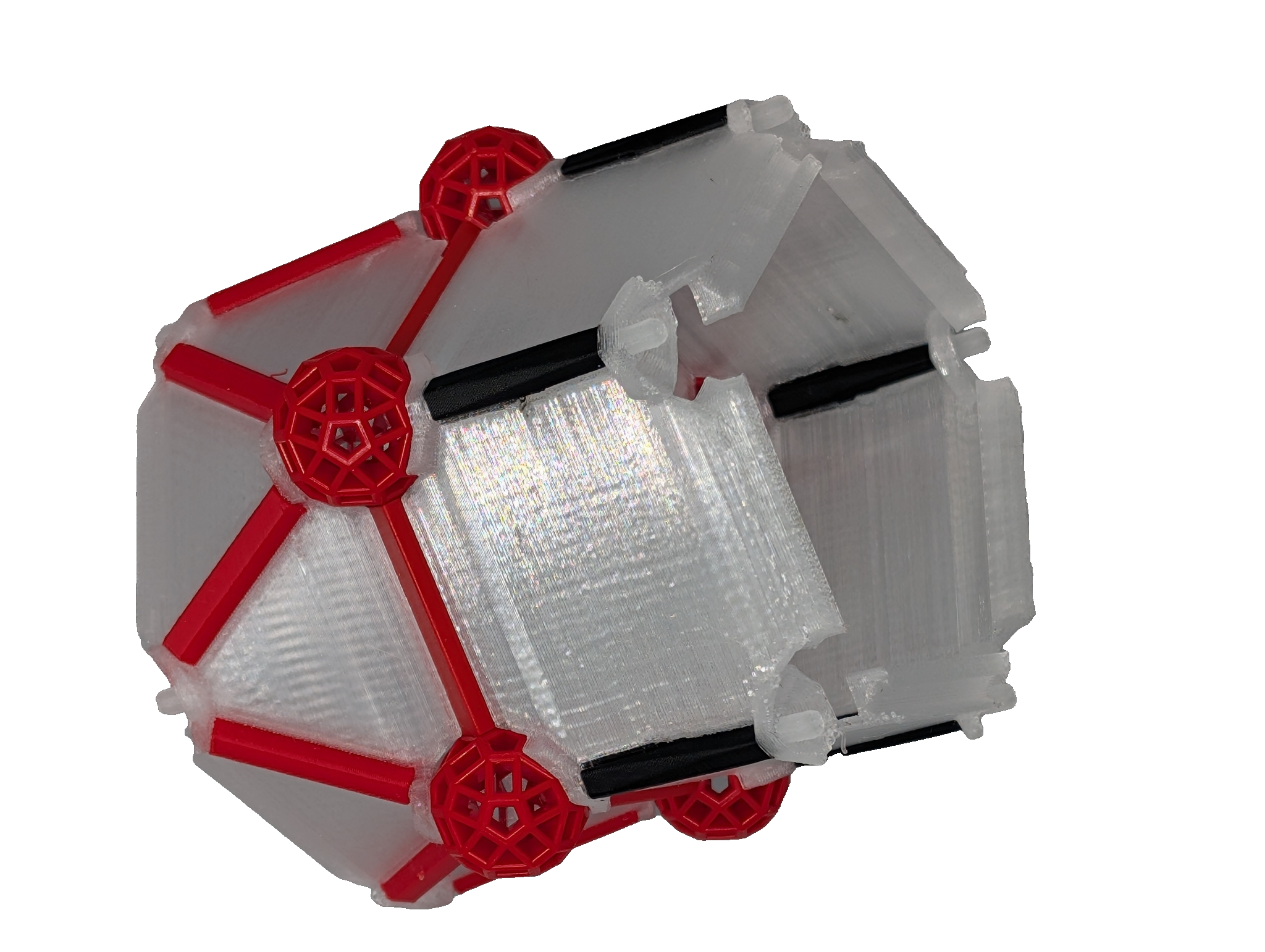
Each of the additional pentagonal prisms require five custom-made blue-length red-orbit struts and five square panels. Instead of printing these individually, I designed a reinforced monolithical object, to be 3D-printed in two colours:
Antiprism extended with an pentagonal prism
Such an extention does not increase the genus of the toroid intrinsically:

genus = 1 + (#edges-#vertices-#faces)/2 → 1+(2220-780-1360)/2 = 41

However, due to its larger size, the extended toroid can now easier encompass another stewart toroid. Connecting both in some way artifically adds up the genus of both. See for instance the construction of a Genus-87 Toroid.