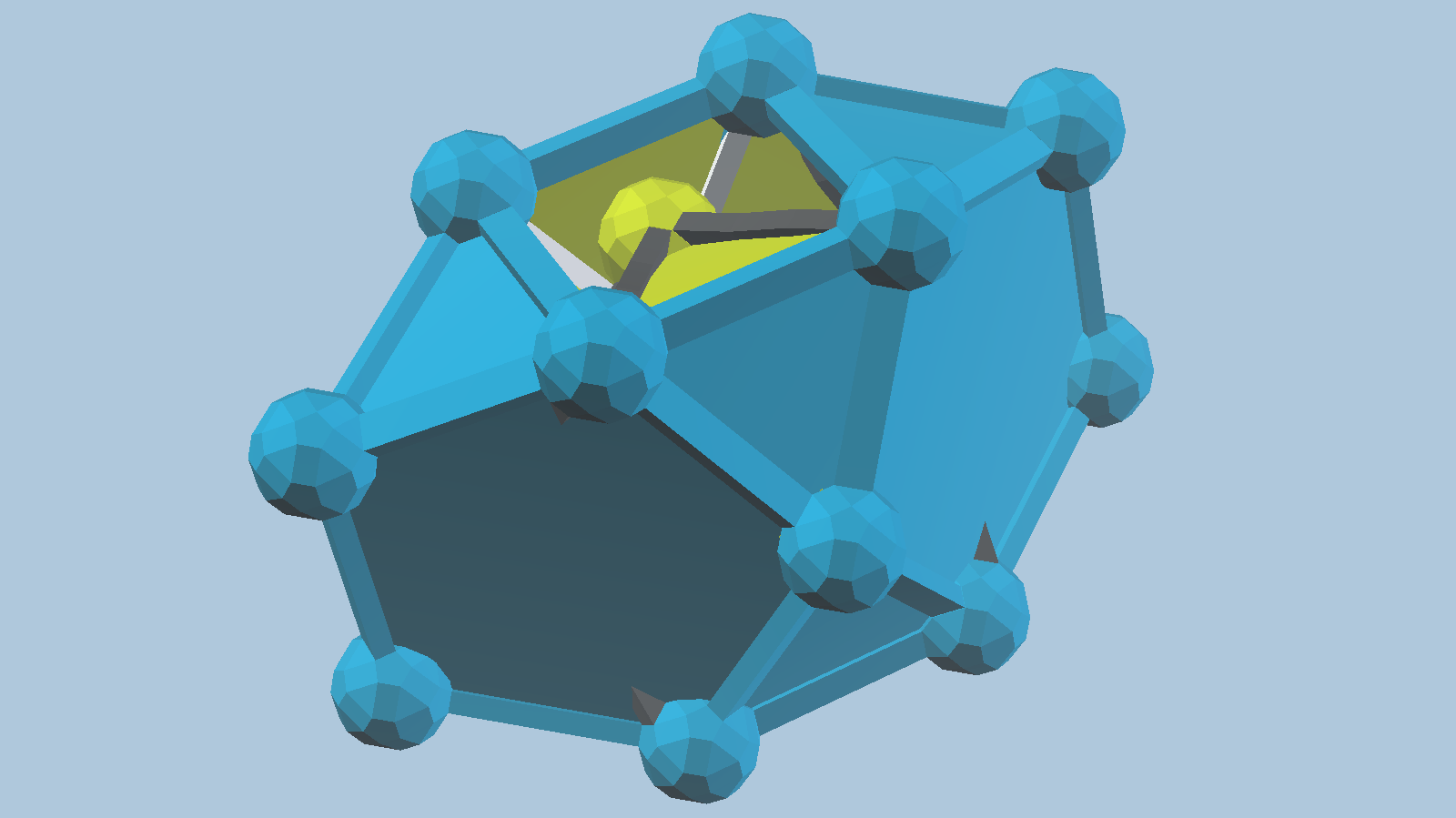
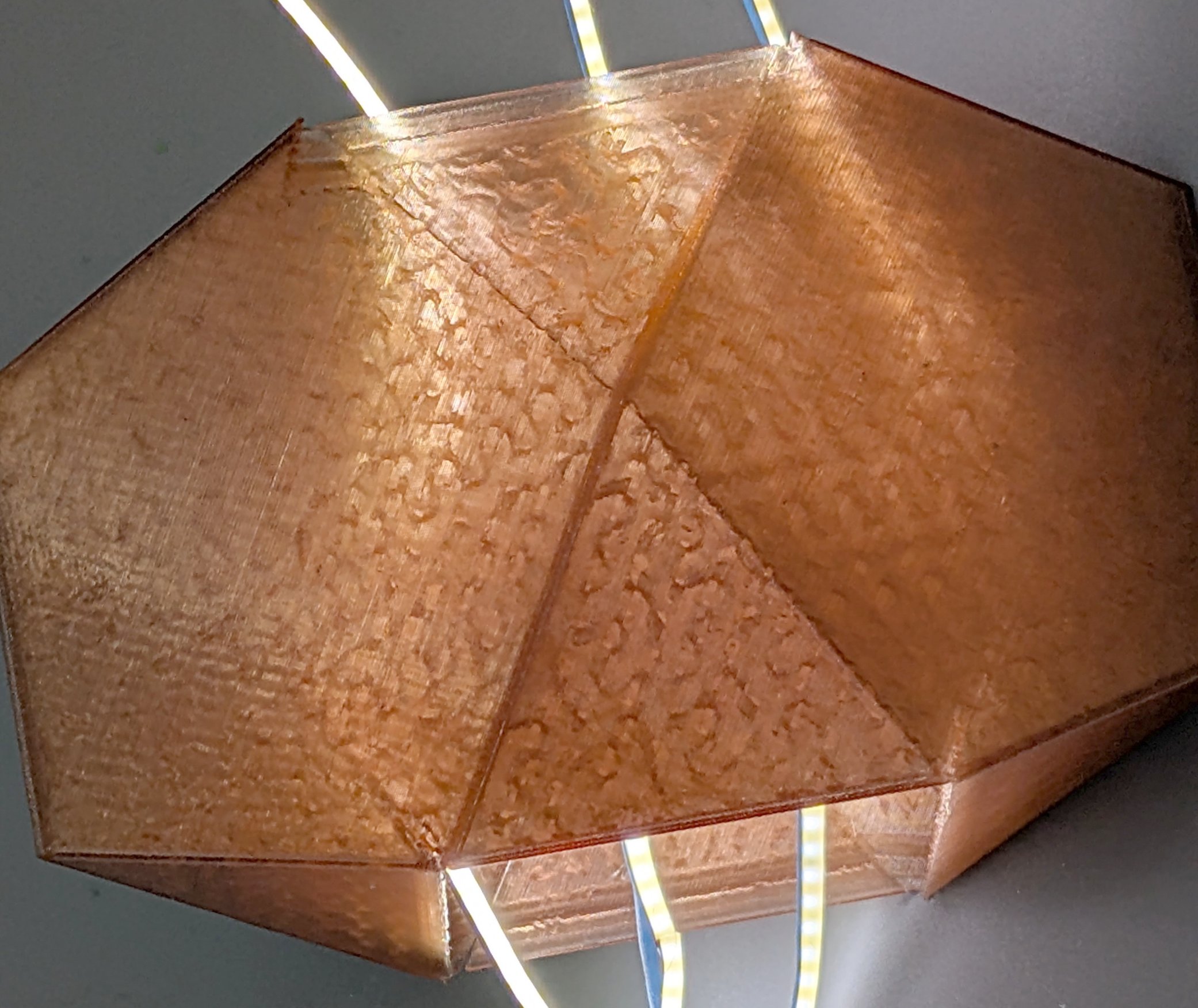
Quoting Richard B. Holmes: “Try making one of these things. If you do not value your sanity. … Figuring out the shape of the damn thing and coercing the pieces into place was quite enough.”
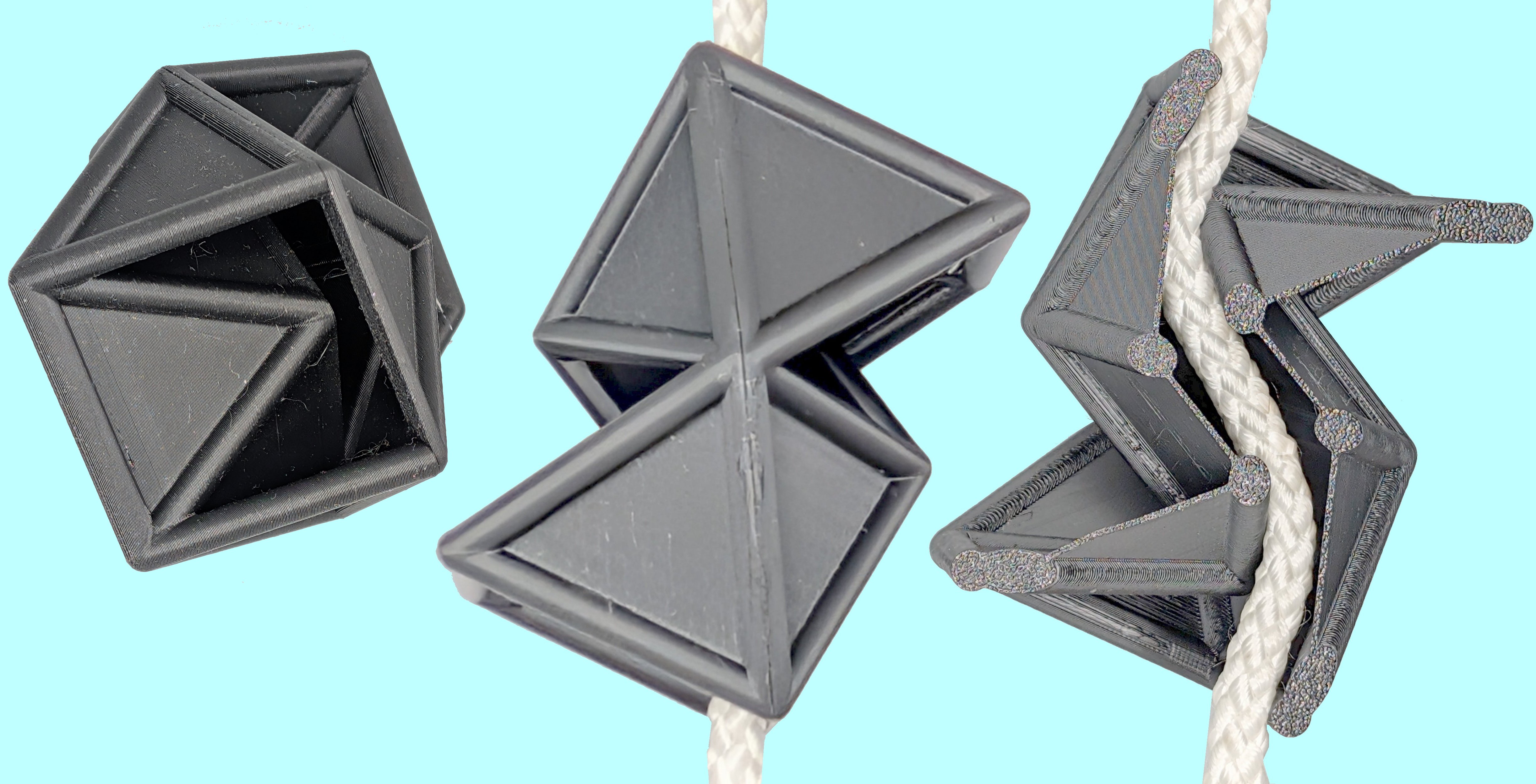
Seriously, drilling a hole in between the square faces of a Bilunabirotunda is not obvious. Obeing Stewart's conditions, the tunnel must be bounded by a sequence of regular polygons with the same edge length. Moreover no adjacent faces may be coplanar. Bonnie Stewart solved the problem by carving out a non-convex polyhedron, the Z4, featuring triangular and square faces arranged in a zig-zag shape. Although there’s no line of sight through it, (see left part of the figure), the Z4 tunnel indeed creates a path in between the square faces, as shown in the middle of the figure.
A Drilled Bilunabirotunda has 20 vertices, 32 faces and 52 edges. This results in a Stewart Toroid with genus 1, which can be verified by:
genus = 1 + (#edges-#vertices-#faces)/2 → 1+(52-20-32)/2 = 1