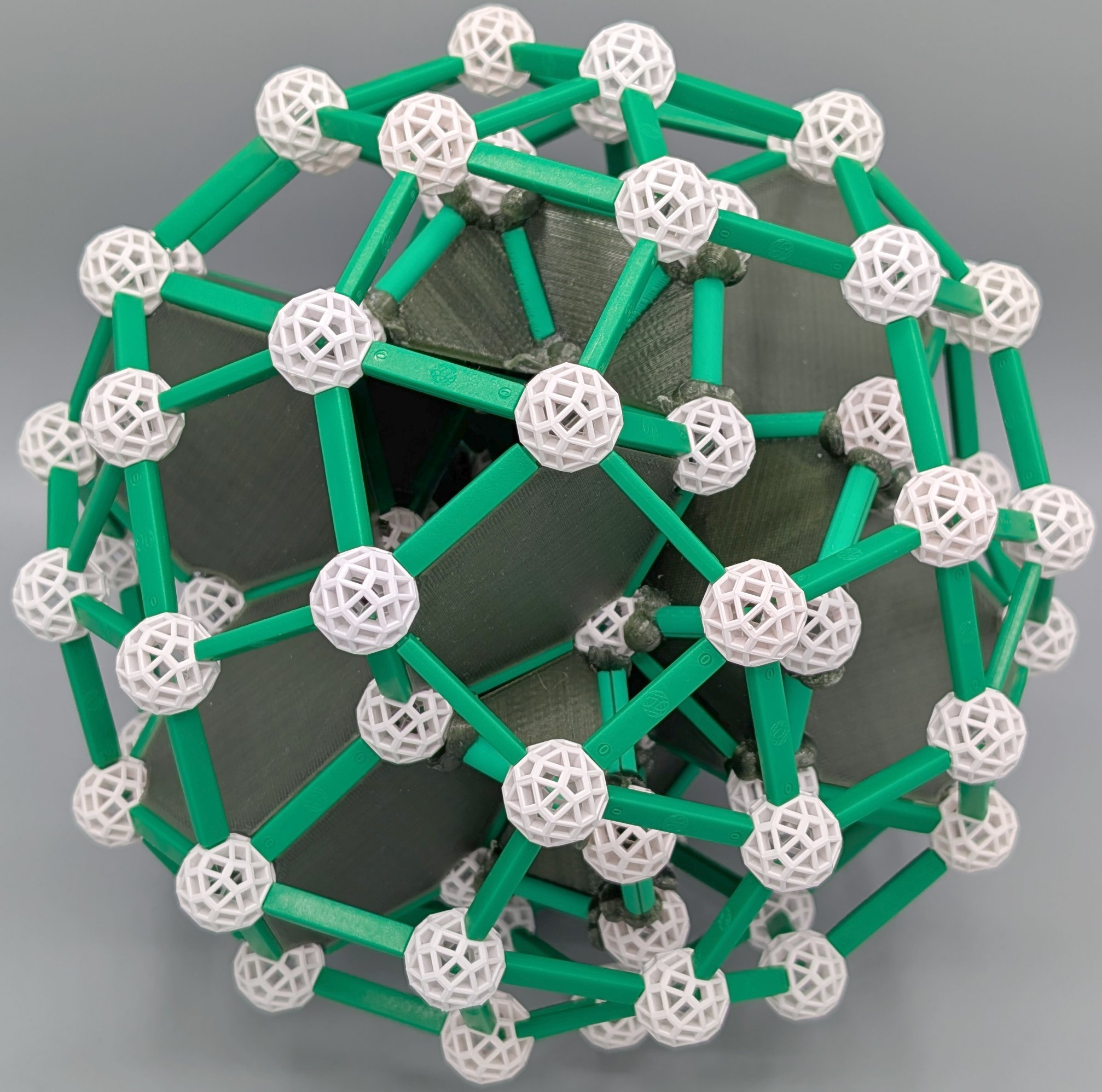
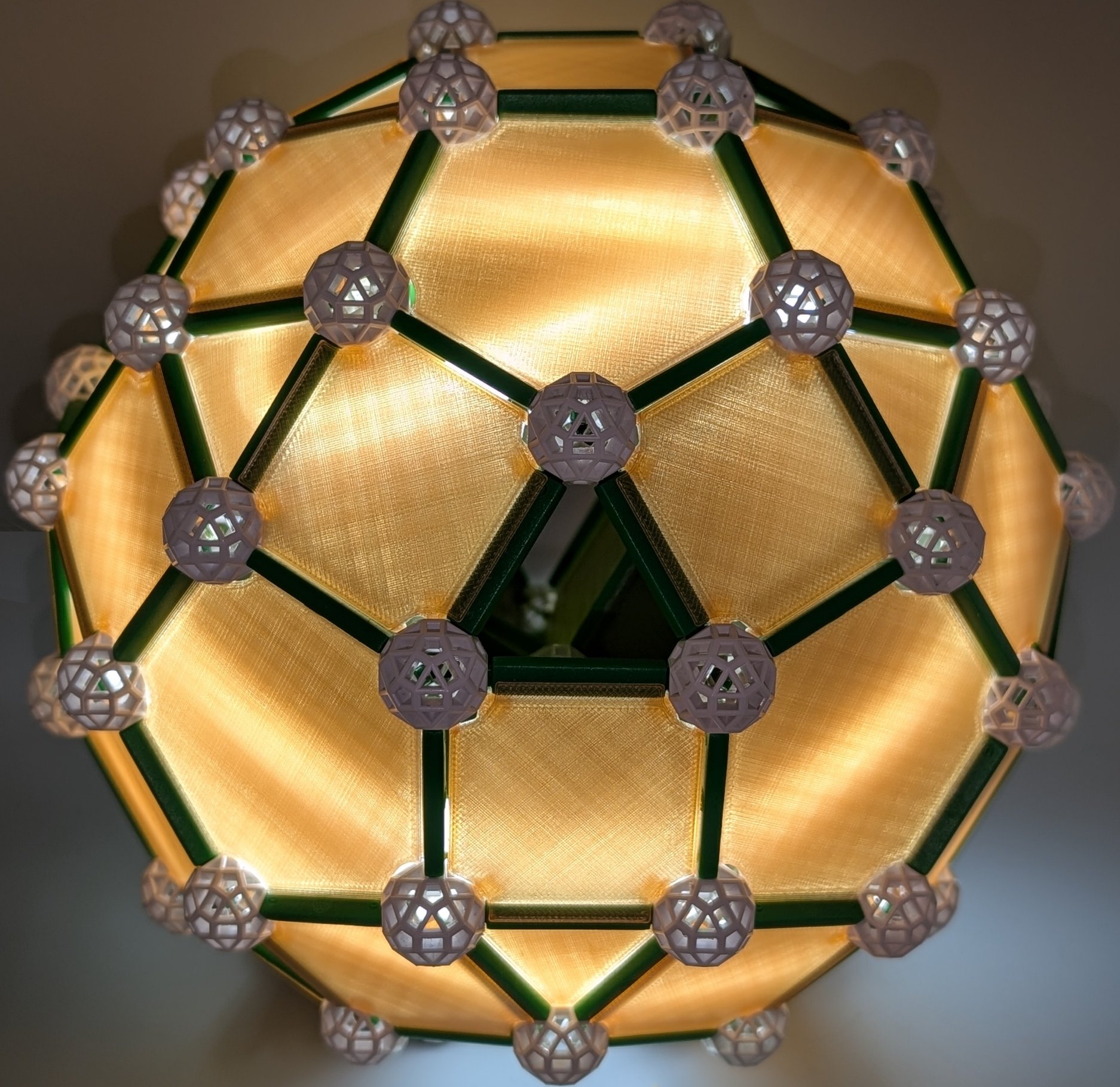
Before GeoMag introduced panels (2003), some internal reinforcements were needed to built a Rhombicosidodecahedron:
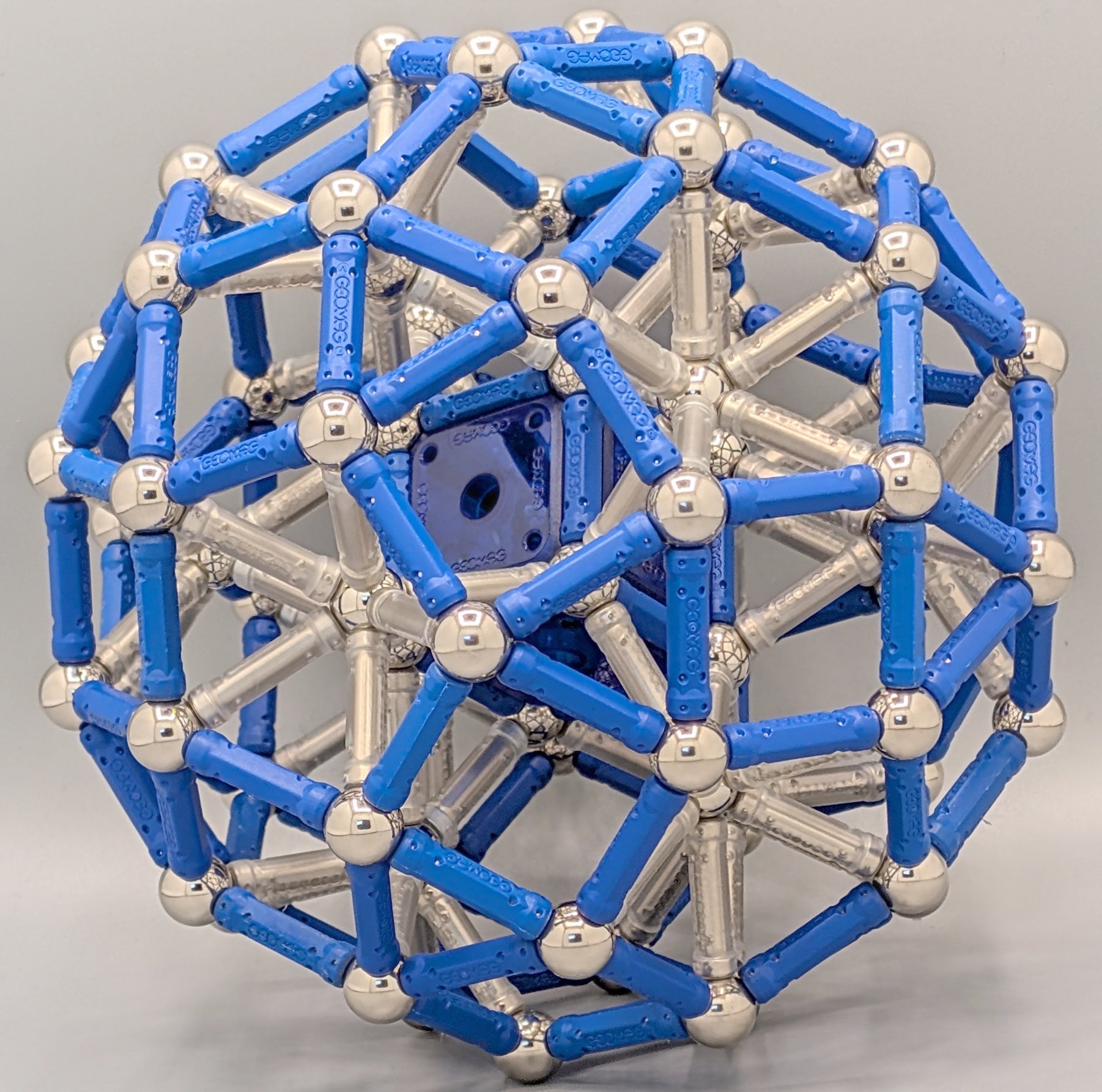
These extra struts can be interpreted as the edges of six Bilunabirotundas around a central cube:
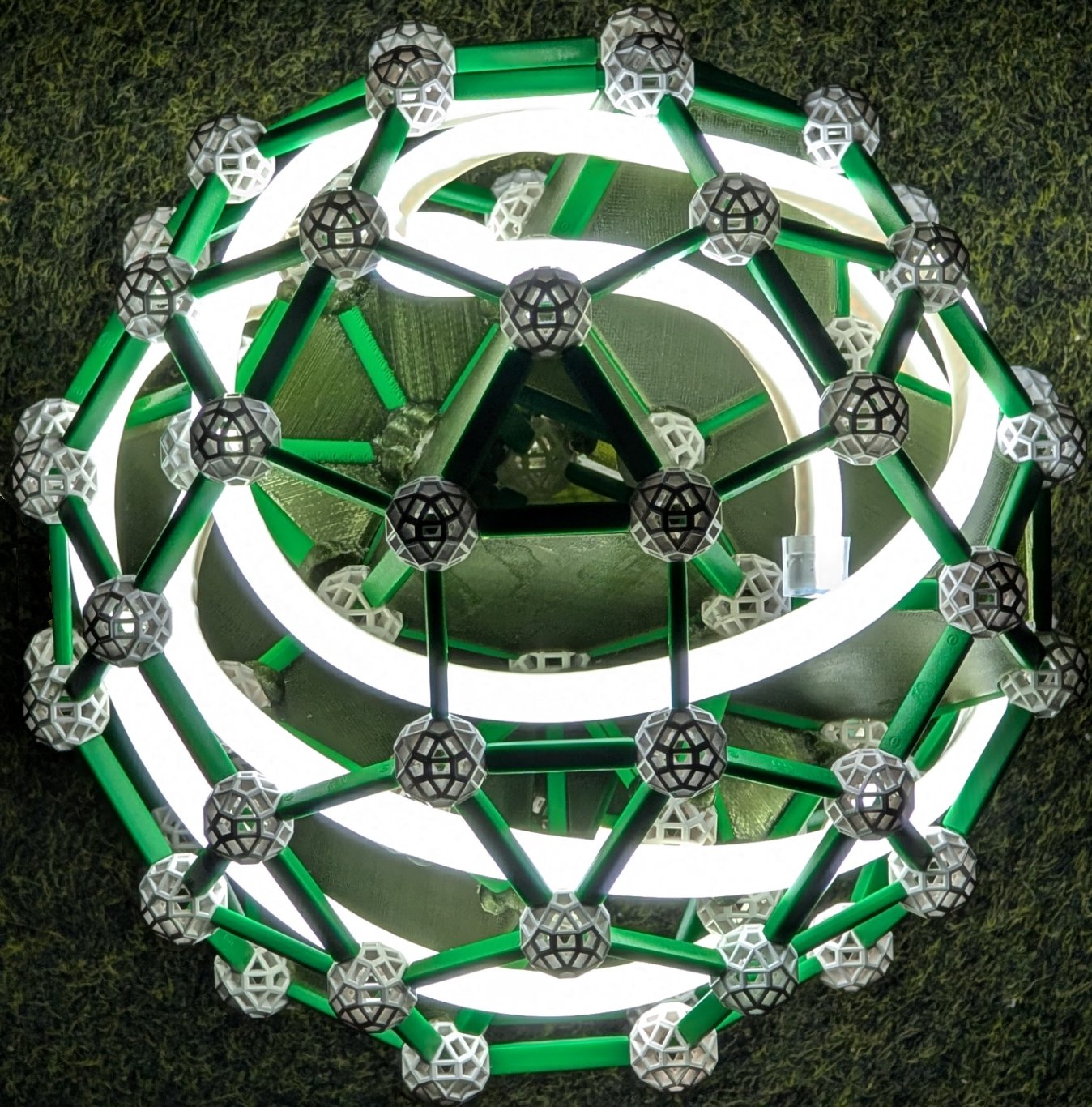
If each of the faces of the central cube could be connected by a individual tunnel to a face of the Rhombicosidodecahedron, bounded by a sequence of regular polygons with the same edge length, one would obtain a Stewart toroid of genus 5. Like drilling a Bilunabirotunda, this is not an obvious task. Again quoting Richard B. Holmes: “For even bigger laughs you can notice … can be subtracted from a rhombicosidodecahedron to make a, a, a, oh god make it stop…”. Of course, Bonnie Stewart made it sound easy, introducing another non-convex polyhedron, the X-polyhedron. One of its square faces and one of its triangular faces exactly correspond to a face of the central cube and a triangular face of the Rhombicosidodecahedron. Removing these, one obtains the required tunnel, including a direct line of sight through it (see left views on the following figure).
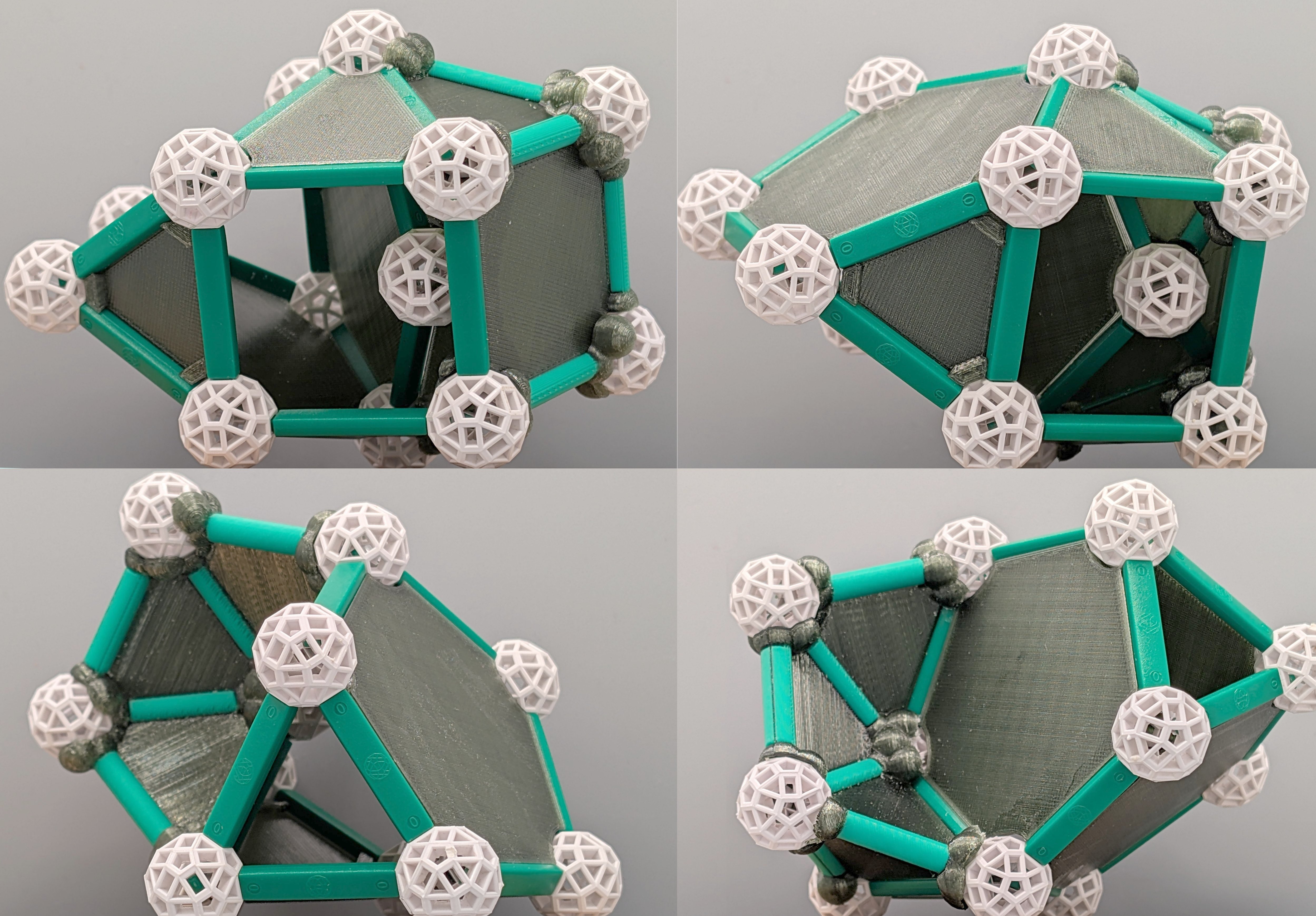
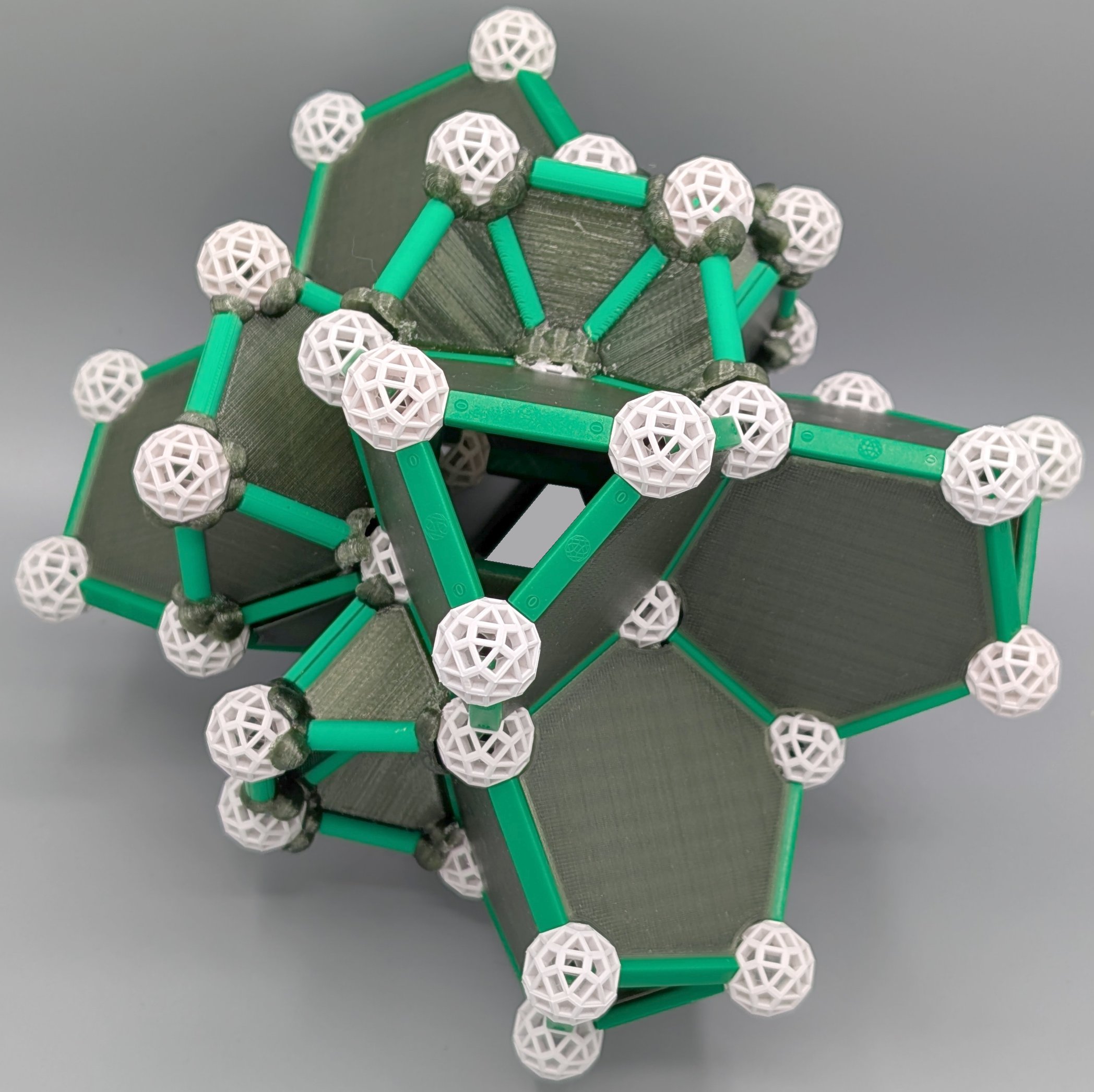
A X-polyhedron has 13 vertices, 14 faces and 25 edges. The edges not belonging to the blue Zome orbit are 3D printed, monolitically with their neighbouring panels:
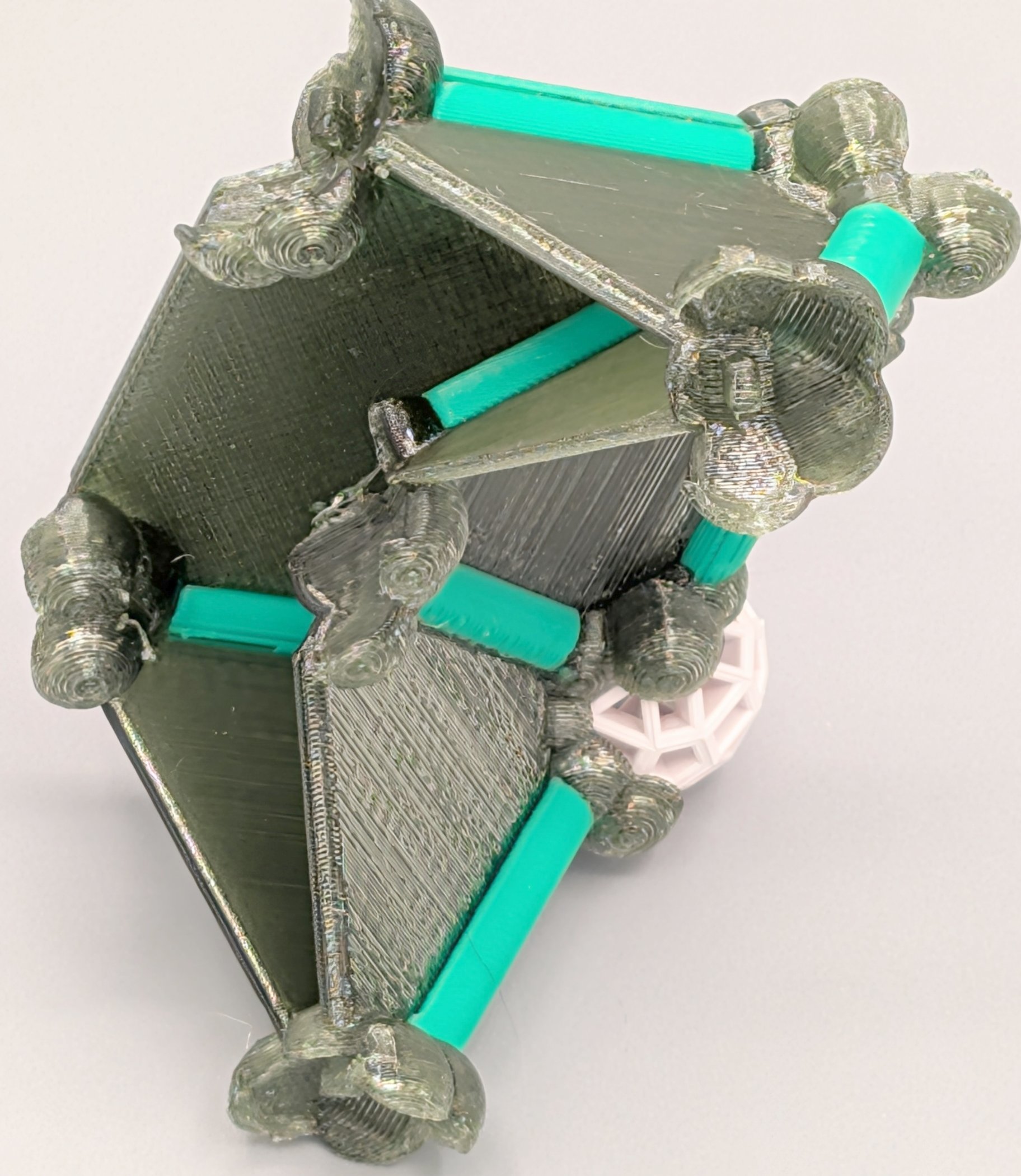
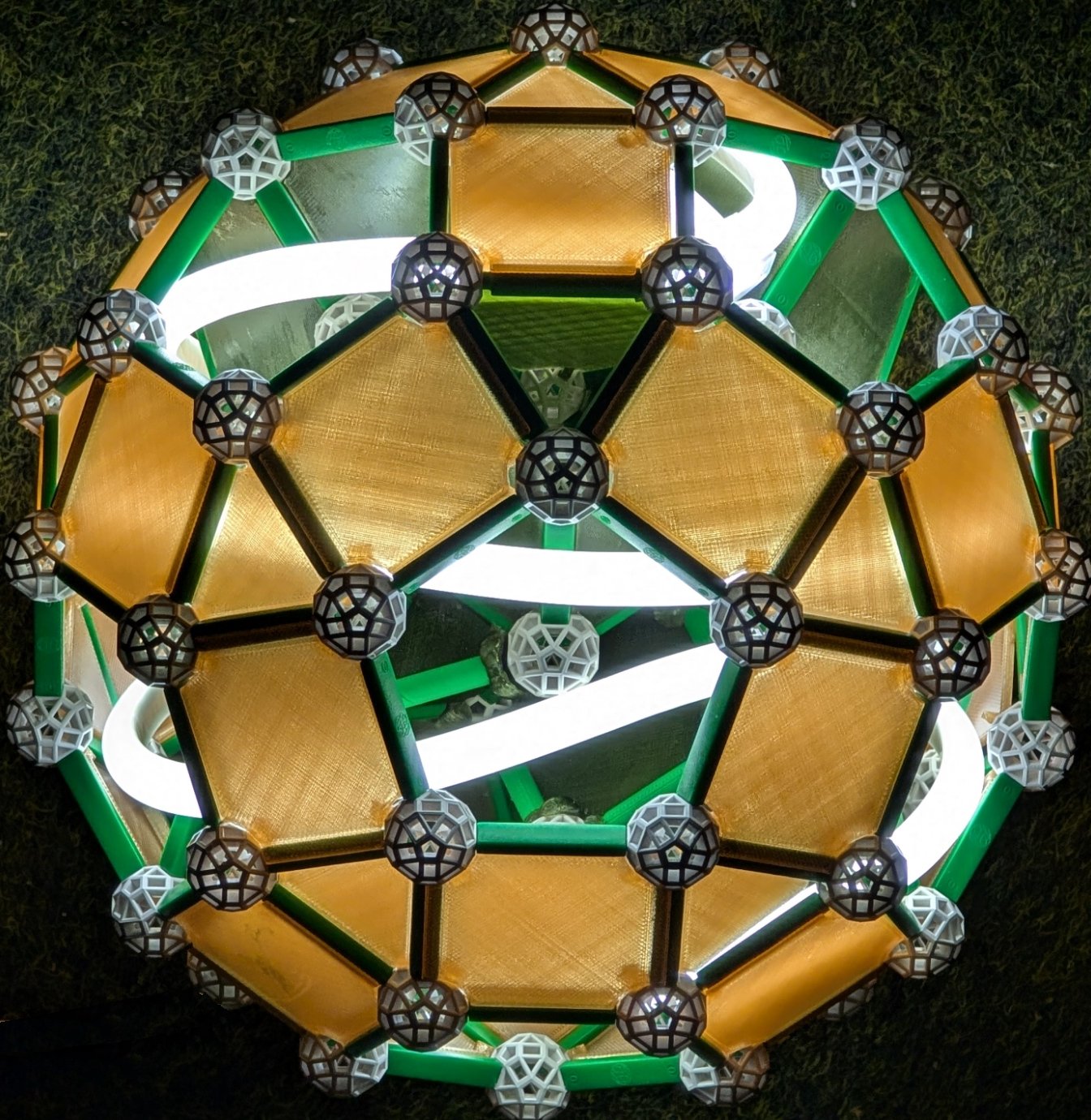
Using these parts and 3D printed panels (rhombicosidodecahedron panels in orange, tunnel pannels in olive green), a Zometool model can be build using the following steps:
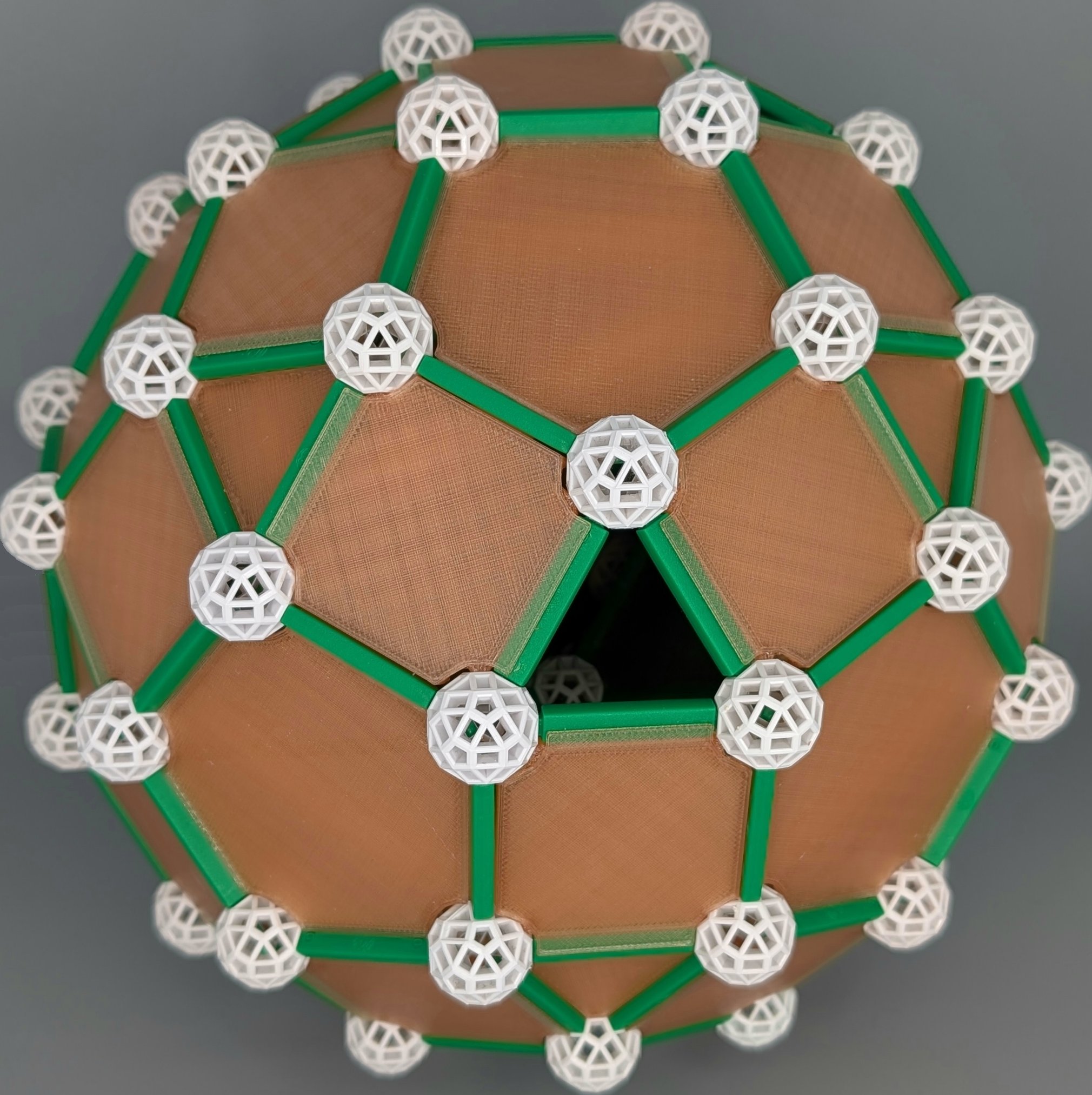
This Drilled Rhombicosidodecahedron has 98 vertices, 116 faces and 222 edges, which indeed confirms a genus 5:
genus = 1 + (#edges-#vertices-#faces)/2 → 1+(222-98-116)/2 = 5
The next photographs illustrate some steps during the building process: